Chausie
athletic, intelligent, active, loyal
Quick Facts
- Lifespan
- 12-14 years
- Weight
- 4.5-9 kg
- Origin
- United States
- Coat
- Short
Overview
Overview
The Chausie is a large, athletic domestic cat developed through hybridization between the wild jungle cat (Felis chaus) and domestic cats. The breed emerged from a deliberate breeding program in the United States during the 1990s, building on centuries of informal human-jungle cat interaction in the ancient Near East. Today's Chausies are fully domestic in temperament but retain the lean, muscular physique and extraordinary athleticism of their wild ancestor.
TICA recognized the Chausie in 1995 and granted championship status in 2013. All TICA-registered Chausies are SBT (Stud Book Tradition) cats — four or more generations beyond jungle cat ancestry — and are fully domestic for all ownership, registration, and import purposes. They typically weigh 4.5–9 kg and live 12–14 years.
History & Origins
History
The Chausie's roots reach back thousands of years. Jungle cats (Felis chaus) were found across ancient Egypt, and mummified specimens have been discovered in Egyptian temples — suggesting the animals held ritual significance. Informal hybridization between jungle cats and domestic cats may have occurred in Egypt as far back as the early centuries CE.
Modern breed development began in the late 1960s and 1970s when a small number of breeders in the United States began deliberate crosses between jungle cats and domestic breeds including the Abyssinian and Oriental Shorthair. The goal was to offer an alternative to keeping non-domestic wild cats as pets.
A formal breeding program was established in the 1990s, and the breed was named the Chausie (from Felis chaus). TICA granted registration status in 1995 and championship status on 1 May 2013.
All Chausies available today for show and companionship are SBT cats — four or more generations removed from any wild ancestor — and are fully domestic cats in every legal and behavioral sense.
Appearance
Physical Characteristics
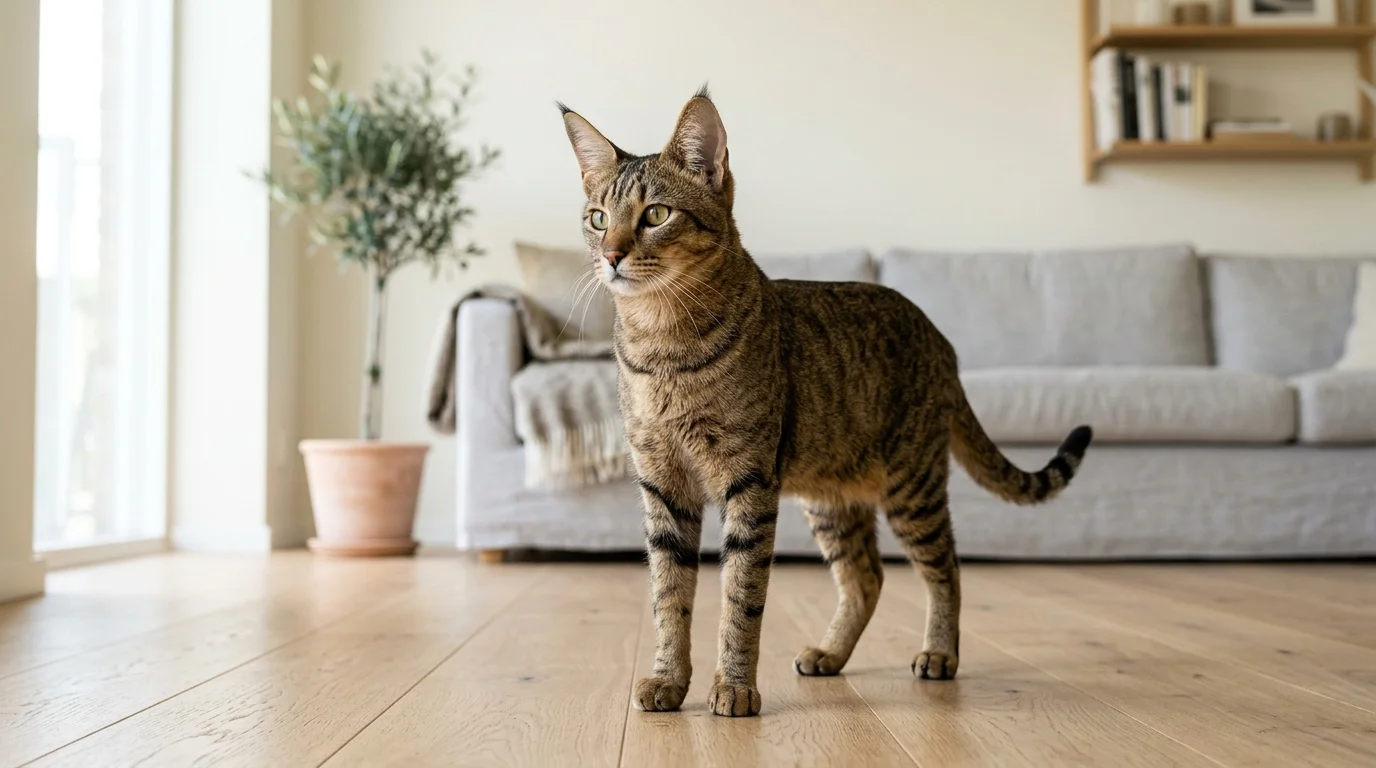
The Chausie is a large, lean cat with a wild-looking athletic build. Adult males typically weigh 5–9 kg while females are slightly smaller at 4.5–6 kg.
Body: Long, lean, and muscular, with long legs and a deep chest. The Chausie can reportedly jump up to 1.8 metres (6 feet) straight into the air.
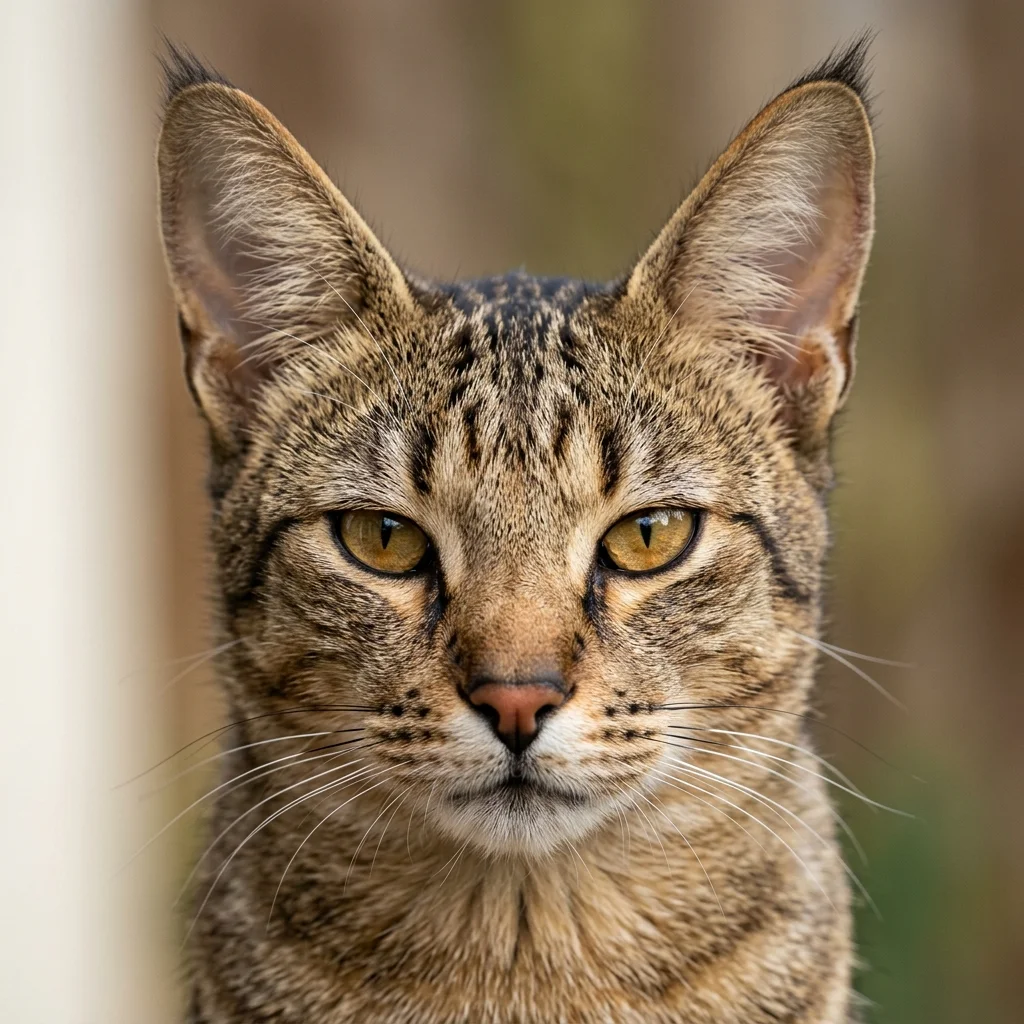
Head: Elongated, angular, with high cheekbones and a broad, slightly rounded forehead. Ears are large, tall, and set high on the head with tufted tips.
Eyes: Slightly angled, golden to yellowish-green in color.
Coat: Short to medium-short, dense, and lying close to the body.
Colors: Only three colors are accepted in TICA's breed standard — solid black, black grizzled tabby (unique to the Chausie), and brown ticked tabby.
Tail: Medium length, may be slightly shorter than in typical domestic cats.
Temperament
Temperament
The Chausie is one of the most active and intelligent domestic cat breeds. These cats are almost constantly in motion, and they need rich mental and physical stimulation to stay happy and balanced. They form deep bonds with their owners and are loyal companions — but they are not lap cats in the traditional sense.
Chausies are social and affectionate, thriving in homes where they receive frequent interaction. They do not do well when left alone for extended periods and can become destructive out of boredom. A feline or canine companion is strongly recommended for Chausie owners who work long hours.
With their intelligence and trainability (5/5), Chausies can learn leash walking, fetch, and complex interactive games. They are good-natured with children and other pets when properly socialized, though their high energy level means they are best suited for active households.
Activity & Play
Activity & Exercise
The Chausie is a high-energy, athletically built cat that requires significantly more daily activity than most domestic breeds. Descended from the jungle cat (Felis chaus), it retains strong hunting instincts and a drive to move, explore, and problem-solve.
Daily Exercise Needs
Plan for a minimum of 60 to 90 minutes of active play each day. This should be spread across multiple sessions rather than one block. A single 15-minute play session will not satisfy a Chausie. Owners who cannot commit to sustained daily engagement should consider a less demanding breed.
Play Styles
The Chausie plays hard and prefers movement-intensive activities:
- Wand toys with fast, unpredictable movement: triggers the Chausie's acute prey drive
- Running and chasing: long-distance toy throws across a hallway or open room
- Fetch: many Chausies learn to retrieve, making interactive sessions easy to sustain
- Obstacle courses and agility setups: tunnels, platforms, and jumps suit the breed's physical capability
- Puzzle feeders: essential for mental engagement between active sessions
Vertical Space
Vertical access is critical. The Chausie is a powerful jumper that can clear heights most domestic cats cannot. Cat trees over 6 feet, wall-mounted shelves reaching ceiling height, and multi-level climbing structures are ideal. Without adequate vertical space, the Chausie will find its own routes -- often on top of cupboards and refrigerators.
Indoor vs. Outdoor
The Chausie benefits from outdoor access but only in a fully secure enclosure. Its speed, athleticism, and prey drive make unsupervised outdoor roaming dangerous for wildlife and potentially for the cat. A large, enclosed catio or leash walks provide a safe outlet.
Mental Stimulation
Intelligence is high. Rotate toys frequently, use varied puzzle feeders, and consider harness training for outdoor enrichment. A bored Chausie will find its own entertainment, which rarely aligns with household preferences.
Grooming
Grooming
The Chausie's short, dense coat is easy to maintain and requires minimal grooming effort.
Brushing: Once a week with a soft bristle brush or rubber mitt is sufficient to remove loose hair and maintain coat condition. The coat does not mat or tangle.
Bathing: Occasional bathing (every 4–8 weeks) is optional but can help with shedding management.
Ears: Check weekly for wax buildup or debris. Clean with a vet-approved solution as needed.
Nails: Trim every 2–3 weeks.
Dental: Daily toothbrushing or dental treats are important for long-term oral health.
Chausies have a fast metabolism and higher energy output than typical domestic cats, so their diet should be protein-rich and free from plant-based fillers — which their shorter intestinal tract cannot process efficiently.
Health
Health
The Chausie is considered a generally healthy breed, but several areas require owner awareness:
- Gluten and plant sensitivity: Chausies have a shorter intestinal tract inherited from their jungle cat ancestry, making them prone to chronic digestive issues — including inflammatory bowel disease — when fed grain-containing or plant-heavy diets. A high-quality, grain-free, meat-based diet is strongly recommended.
- Hypertrophic cardiomyopathy (HCM): As with most larger domestic breeds, HCM is a concern. Responsible breeders screen breeding stock via echocardiogram.
- Vaccinations: Because early-generation hybrids can have variable vaccine responses, ensuring that Chausies (especially SBT generation and above) are kept current on vaccinations is important.
Chausies benefit greatly from routine veterinary check-ups and a diet carefully matched to their unique digestive physiology. Expected lifespan is 12–14 years.
Nutrition
Nutrition
The Chausie is a large, lean, highly active cat with a digestive system that differs from most domestic breeds. Its partial wild ancestry means it has some unique dietary considerations that owners must understand.
Macronutrient Targets
- Protein: 45 to 55% of dry matter -- the highest protein requirement of any breed in this guide. Animal-sourced protein must dominate the diet
- Fat: 20 to 30% of dry matter -- necessary to fuel the Chausie's high activity level
- Carbohydrates: 5% or less -- the Chausie is particularly sensitive to plant-based carbohydrates and does not tolerate them well
Wet vs. Dry Food
Wet food and raw diets are strongly preferred for the Chausie. The breed often poorly tolerates grain-based dry kibble and may develop gastrointestinal issues including inflammatory bowel symptoms when fed high-carbohydrate diets. A high-protein, grain-free wet food or a properly balanced raw diet is the best foundation.
Feeding Frequency
- Kittens (under 6 months): 4 meals per day -- Chausie kittens grow fast and need sustained nutrition
- Juniors (6 to 12 months): 3 meals per day
- Adults (1 to 8 years): 2 to 3 meals per day; active individuals may need more calories than average-sized domestic cats
- Seniors (8+): 2 meals per day with attention to digestive sensitivity
Breed-Specific Considerations
The Chausie has a notably short digestive tract compared to fully domestic cats, which limits its ability to process plant material. Grains, corn, and soy should be avoided. Many Chausies benefit from limited-ingredient diets or raw feeding plans designed for active, large-framed cats. Consult a vet familiar with hybrid breeds before making significant dietary changes.
Family Fit
Family Fit
The Chausie is not a breed for every household. Its high energy, intelligence, and intensity make it a rewarding companion for the right owner, but a challenging one for those unprepared for its demands.
With Children
Best suited to older children (8 and above) who can engage confidently in active, interactive play. The Chausie is not aggressive, but it moves fast and plays intensely -- small children may be overwhelmed or accidentally scratched during play. Toddlers should always be supervised. With older children who understand boundaries, the Chausie can be a highly entertaining playmate.
With Other Cats
The Chausie can coexist with other cats but does best with equally active companions. A sedentary cat may find the Chausie's energy overwhelming. Another high-energy breed as a companion is ideal, as it gives the Chausie a play partner and reduces pressure on the owner.
With Dogs
Can work well with dogs that are active and cat-friendly. The Chausie is confident and unlikely to be intimidated, but introductions must be controlled. Avoid pairing with dogs with strong prey drive.
With Elderly Owners
Not recommended as a primary companion for elderly or low-activity owners. The Chausie's exercise and engagement demands are genuinely high and require sustained owner participation.
Apartment Living
Possible only in large apartments with extensive vertical enrichment and committed daily play. A small apartment without outdoor access and minimal stimulation is not suitable for this breed.
For First-Time Cat Owners
Not recommended for first-timers. The Chausie's energy, intelligence, and need for enrichment make it better suited to experienced cat owners who understand high-needs breeds. First-time owners who choose the Chausie should research extensively and be fully prepared before bringing one home.
Fun Facts
Fun Facts
- Ancient origins: Jungle cats were found in ancient Egyptian temples and may have been domesticated informally alongside the ancestors of today's domestic cats.
- Six feet in the air: Chausies are extraordinary leapers — capable of jumping up to 1.8 metres straight up without a running start.
- Grizzled tabby: The black grizzled tabby pattern found in Chausies is unique to this breed in the domestic cat world, inherited directly from the jungle cat.
- Fully domestic: Despite their hybrid origins, all TICA-registered Chausies are SBT cats — at least four generations beyond any wild ancestor — and are legally and temperamentally full domestic cats.
- Diet matters: Unlike most cats, Chausies have a digestive system more sensitive to plant matter. A purely meat-based diet is not just preferable — for many Chausies, it is medically necessary.
FAQ
Frequently Asked Questions
How long do Chausies live?
The Chausie typically lives 12 to 14 years. Some individuals reach 15 or more with excellent care. Its hybrid origins mean health outcomes can be variable, and early-generation Chausies (F1, F2) may have more complex health considerations than later-generation cats.
Do Chausies shed a lot?
Moderately. The short, dense coat sheds but not excessively. Weekly brushing is adequate for most of the year, with slightly more during seasonal shedding periods. The coat requires minimal grooming effort overall.
Are Chausies vocal?
Yes, and distinctively so. The Chausie can produce a range of sounds beyond typical domestic cat vocalisations, including sounds inherited from its jungle cat ancestry. It is communicative and will vocalise to express needs, excitement, and displeasure. Households that prefer quieter cats should look elsewhere.
Are Chausies hypoallergenic?
No. The Chausie is not hypoallergenic and produces normal amounts of Fel d 1 allergen. Allergy sufferers should spend time with the breed before committing to ownership.
How much does a Chausie cost?
The Chausie is a rare and expensive breed. Expect to pay between $1,500 and $3,000 USD from a reputable breeder, with early-generation (F1, F2) cats often commanding higher prices due to rarity and the complexity of breeding.
Are Chausies legal to own?
In most countries and US states, yes. However, early-generation Chausies (particularly F1 hybrids) may be restricted in some jurisdictions that regulate hybrid cats. Check local laws before purchasing, especially outside the United States.
Are Chausies good for cold climates?
The Chausie tolerates indoor environments well regardless of climate, but its short coat provides limited insulation. In cold climates, ensure warm indoor spaces and avoid extended outdoor exposure in freezing temperatures.
Gallery
Explore more Chausie-style breeds
Browse related breeds or take our matching quiz to find the right fit for your home.
Stay in the loop
Get weekly breed spotlights, care guides, and new additions - straight to your inbox.