Korat
intelligent, playful, gentle, loyal
Quick Facts
- Lifespan
- 15-20 years
- Weight
- 2.7-4.5 kg
- Origin
- Thailand
- Coat
- Short
Overview
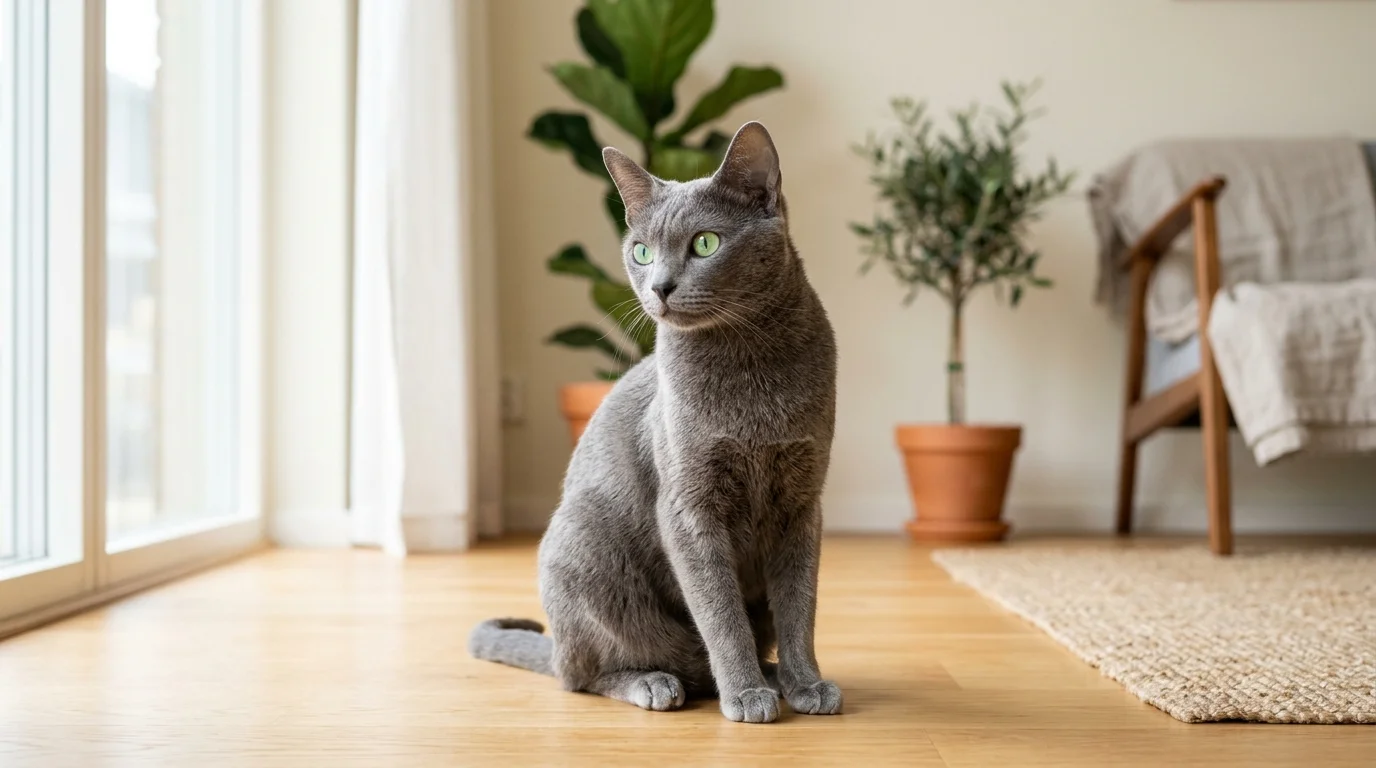
The Korat is one of the oldest and most revered natural cat breeds in the world, originating in the Nakhon Ratchasima province of Thailand. Prized for its shimmering silver-blue coat and heart-shaped face, the Korat has been a symbol of good fortune and prosperity in Thai culture for centuries. Intelligent, gentle, and deeply loyal, this breed forms close bonds with its chosen people and thrives on companionship.
History & Origins
The Korat is one of the world's oldest documented cat breeds, with its earliest recorded description appearing in the Thai Tamra Maew (The Cat-Book Poems), a manuscript believed to date between 1350 and 1767 CE now held in the National Library of Thailand. In its homeland, the Korat — known locally as the Si-Sawat, meaning "colour of the sawat seed" — has long been regarded as a bringer of prosperity, fertility, and good luck. Pairs of Korats are traditionally given as gifts to newlyweds or highly esteemed individuals.
The breed remained largely unknown outside Southeast Asia until 1959, when cat enthusiast Jean Johnson received a breeding pair from a friend in Bangkok and brought them to the United States. The Korat was accepted into CFA championship competition in 1966. Today it is also recognised by TICA, FIFe, and GCCF.
The breed standard is strict: unlike many modern breeds, the Korat has remained essentially unchanged from its natural Thai form for centuries, and only the blue coat colour is accepted for show competition.
Appearance
The Korat is a small to medium-sized cat with a compact, semi-cobby body that feels heavier than it looks. Adults typically weigh 2.7–4.5 kg. Despite their relatively modest size, Korats are surprisingly muscular and solid.
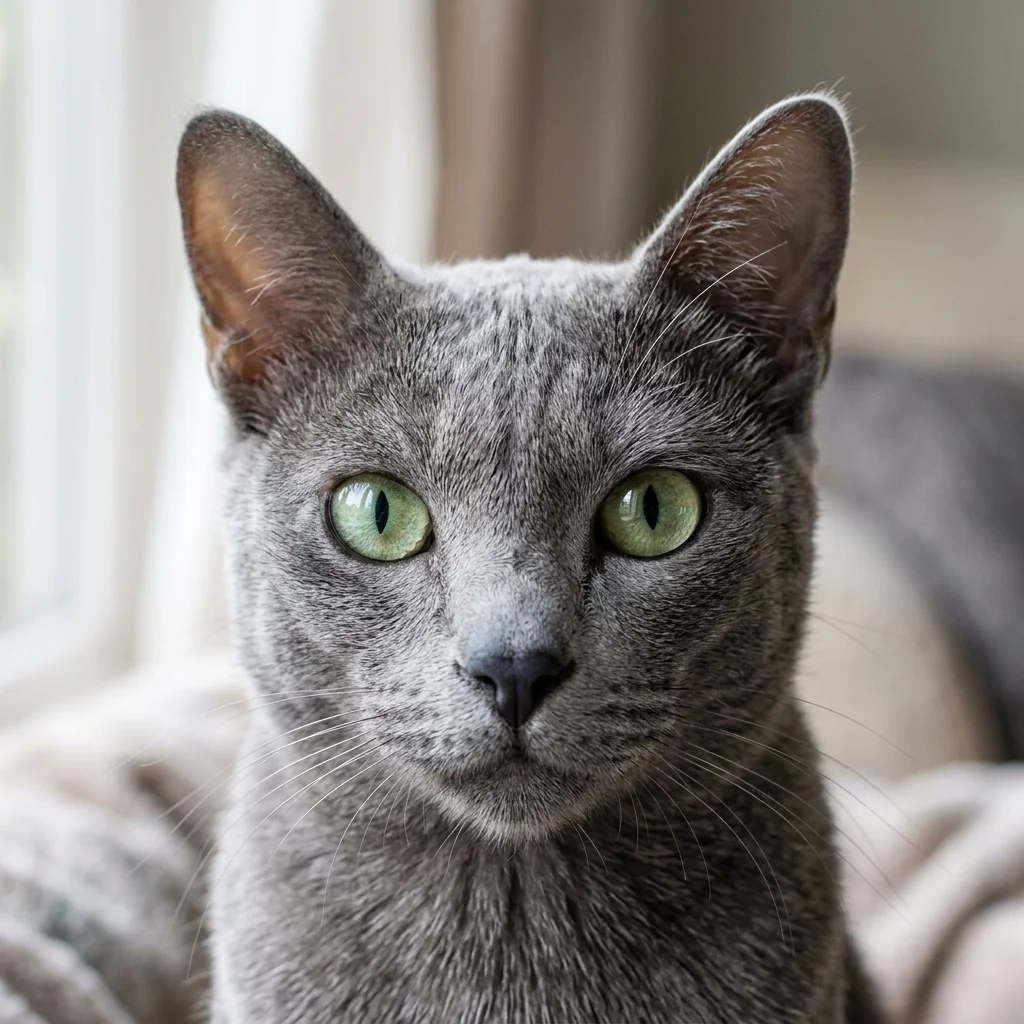
The breed's most distinctive feature is its short, fine, single-layer coat in an even, silver-blue shade. Each hair is lighter at the roots and darkens toward the tip, with the very tip silver — creating a luminous, halo-like shimmer in certain light. The coat lies flat against the body with no undercoat.
The head is a unique heart shape when viewed from the front — broad across the forehead, tapering to a gentle point at the chin, with large green eyes (sometimes amber in kittens) positioned to reinforce the heart shape. The eyes are the most prominent feature of the face, appearing oversized relative to the head. Ears are large, open, and set high, with rounded tips.
Temperament
Korats are intensely people-oriented cats that form strong, devoted bonds with their human families. They tend to pick a favourite person and follow them faithfully, but they are genuinely warm and affectionate toward all familiar household members. Their loyalty has earned them comparisons to dogs.
This is an intelligent, alert breed that is keenly aware of its environment. Korats notice and react to changes in routine, and they can be sensitive to loud noise and chaotic household environments. They prefer calm, predictable settings and may become anxious if overstimulated.
Korats are moderately playful and enjoy interactive games, feather wands, and puzzle toys. They like to be involved in whatever their owner is doing and will often shadow their person throughout the day. However, they are not as high-energy or demanding as some other active breeds.
With strangers, Korats can be reserved initially but warm up steadily once they feel comfortable. They generally get along well with other cats and gentle dogs, but may be selective about their companions and prefer the company of their own people above all else.
Activity & Play
Activity & Exercise
The Korat is an alert, playful breed with moderate-to-high energy levels. Native to Thailand, this nimble cat is curious and engaged with its environment, enjoying both physical activity and mental stimulation throughout the day.
Daily Exercise Needs
Korats benefit from 30 to 40 minutes of active play each day. They are naturally athletic and will entertain themselves to some extent, but they thrive with owner-led interactive sessions that challenge both their body and their mind. A bored Korat may become mischievous, so consistent engagement is worthwhile.
Play Styles
Korats enjoy interactive toys that mimic the movement of prey. Wand toys with feathers or ribbons, motorised mice, and laser pointers all capture their attention effectively. They are fast, precise hunters and enjoy the chase element of play. Puzzle toys and treat dispensers provide cognitive challenge and prevent boredom between play sessions. Many Korats enjoy learning fetch-style games and will retrieve small toys repeatedly.
Vertical Space & Environment
The Korat is an agile climber and jumper. Tall cat trees with multiple levels, wall-mounted shelves, and high perches give this breed outlets for its natural athleticism. Vertical space is important for a Korat's wellbeing and helps prevent the restlessness that comes from understimulation.
Indoor vs. Outdoor
Korats are best kept indoors. Their curious, bold nature makes them inclined to explore, which can put them at risk outdoors. An enclosed garden or a window perch overlooking outdoor activity provides stimulation without the associated dangers.
Grooming
The Korat's short, fine, single-layer coat is one of the easiest to maintain of any pedigree breed. Unlike most cats, the Korat lacks a dense undercoat, which means shedding is minimal and matting is virtually non-existent.
A weekly brushing with a soft bristle brush or rubber grooming mitt is all that is required to remove loose hairs and keep the coat's distinctive silver sheen looking its best. Occasional bathing is optional but can enhance the coat's luminosity.
Beyond the coat, routine care includes trimming nails every two to three weeks, cleaning ears as needed, and regular dental hygiene. The Korat's large ears should be checked periodically for wax build-up. Overall, this is one of the lower-maintenance pedigree breeds when it comes to coat care.
Health
The Korat is generally a long-lived and healthy breed, with a lifespan of 15–20 years — among the longest of any pedigree cat. However, the breed has one significant hereditary health concern: gangliosidosis.
GM1 and GM2 gangliosidosis are fatal neurological lysosomal storage disorders caused by autosomal recessive mutations. GM1 is caused by a mutation in the GLB1 gene, while GM2 involves the HEXB gene. Both conditions cause progressive neurological deterioration and are fatal, typically by 9–10 months of age. Genetic testing for both forms is now widely available, and responsible breeders test all breeding cats to ensure only clear-to-clear pairings are made.
Outside of gangliosidosis, Korats are a robust breed with few other known hereditary conditions. Their small gene pool due to strict breed standards makes continued genetic screening essential to the breed's long-term health.
Nutrition
Nutrition & Feeding
The Korat is a lean, muscular breed that maintains a naturally athletic build with the right diet and activity level. Unlike some breeds prone to obesity, Korats tend to self-regulate their food intake better, though consistent feeding habits remain important.
Macronutrient Guidelines
Korats thrive on a high-protein diet based on quality animal sources. A suitable adult diet contains 32 to 42 percent protein and 12 to 18 percent fat on a dry matter basis. Because Korats are active, their caloric needs may be slightly higher than those of sedentary breeds of similar size.
Wet vs. Dry Food
A combination of wet and dry food suits most Korats well. Wet food provides important hydration and supports urinary tract health. Dry kibble, offered in measured amounts, adds variety and dental benefits. Fresh water should always be available, as adequate hydration is important for this breed.
Feeding Frequency
Kittens up to six months need three to four meals daily to fuel rapid growth and high energy levels. Juveniles from six to twelve months can transition to two to three meals per day. Adult Korats do well on two scheduled meals per day. Avoid leaving food out all day, as structured meal times support healthy metabolism.
Breed-Specific Considerations
Korats have a single-layer coat and a slim build, which means they have less insulation and burn energy somewhat efficiently. Their food should support muscle maintenance with adequate protein. Some Korats can be prone to gangliosidosis (a rare inherited condition), so breeders should be asked about genetic testing. Diet does not prevent this condition, but overall health support is beneficial.
Family Fit
Family Compatibility
The Korat forms deep, loyal bonds with its chosen people and tends to prefer a close relationship with a specific individual or family over socialising broadly with strangers. This makes the breed both deeply rewarding and slightly particular about its household environment.
Children
Korats can do well with children who are calm and respectful. They enjoy interactive play and will engage enthusiastically with a child who shares their energy. However, they can be sensitive to loud noise and sudden movements, so very young children may stress this breed. Older, cat-savvy children are the best match.
Other Cats
Korats can be selective about their feline companions. They tend to prefer to be the primary or only cat in the household, though they can adapt to a multi-cat home if introductions are handled carefully and the other cat has a similarly moderate temperament. Dominant or aggressive cats are a poor pairing.
Dogs
With proper introductions, a Korat can coexist with a calm, respectful dog. They are not submissive and will hold their ground, so a dog that chases or pesters cats is not suitable.
Elderly Owners
Korats can work well for active seniors who enjoy an interactive, engaging companion. They require more engagement than low-energy breeds, so owners who prefer a more passive pet may find them demanding.
Apartments
Korats adapt well to apartment living provided they receive adequate daily stimulation. Vertical space and regular play sessions compensate for a smaller floor area.
First-Time Owners
Korats are manageable for first-time owners who are prepared for an engaged, interactive pet. They are not high-maintenance in terms of grooming, but their need for attention and stimulation requires commitment.
Fun Facts
- In Thailand, the Korat is called the Si-Sawat and is traditionally given in pairs as a wedding gift — the pair symbolises the union of two hearts.
- The Korat's coat is described in the Tamra Maew as having the colour of "rain clouds" and the sheen of "silver" — a description that matches the breed perfectly today, centuries later.
- Unlike most cats, the Korat has a single-layer coat with no undercoat, which means minimal shedding and no matting — a low-allergen bonus for sensitive owners.
- The Korat's distinctive green eyes are not fully developed at birth — kittens often have amber or yellowish eyes that gradually shift to peridot green by adulthood.
- Because gangliosidosis is a recessive disorder, a carrier Korat appears completely healthy. This makes genetic testing before breeding absolutely essential to protect future generations.
FAQ
Frequently Asked Questions
How long do Korats live?
Korats are a robust, long-lived breed. Most live between 10 and 15 years, with some reaching their late teens. Their lean build and moderate activity level contribute to good long-term health.
Do Korats shed a lot?
Korats have a short, single-layer coat with no undercoat, which means they shed very little compared to double-coated breeds. Occasional brushing to remove loose hair and distribute natural oils is all that is needed.
Are Korats vocal?
Korats are moderately vocal. They communicate with soft, pleasant voices and will express their needs or greet their owners with quiet meows. They are not as loud or persistent as Siamese cats, but they do enjoy conversing with their people.
Are Korats hypoallergenic?
No cat is truly hypoallergenic. Korats have a short single coat and shed minimally, which may reduce allergen exposure compared to heavily shedding breeds, but they still produce the Fel d 1 protein that triggers allergies.
How much does a Korat kitten cost?
Korat kittens from reputable breeders typically cost between $600 and $1,500 USD. The breed is relatively rare outside of Thailand and select Western countries, which can affect availability and price.
Are Korats easy to train?
Korats are highly intelligent and respond well to positive reinforcement. They can learn tricks, commands, and routines with patience. Their curiosity and engagement with their environment make training sessions enjoyable for both cat and owner.
Gallery
Explore more Korat-style breeds
Browse related breeds or take our matching quiz to find the right fit for your home.
Stay in the loop
Get weekly breed spotlights, care guides, and new additions - straight to your inbox.