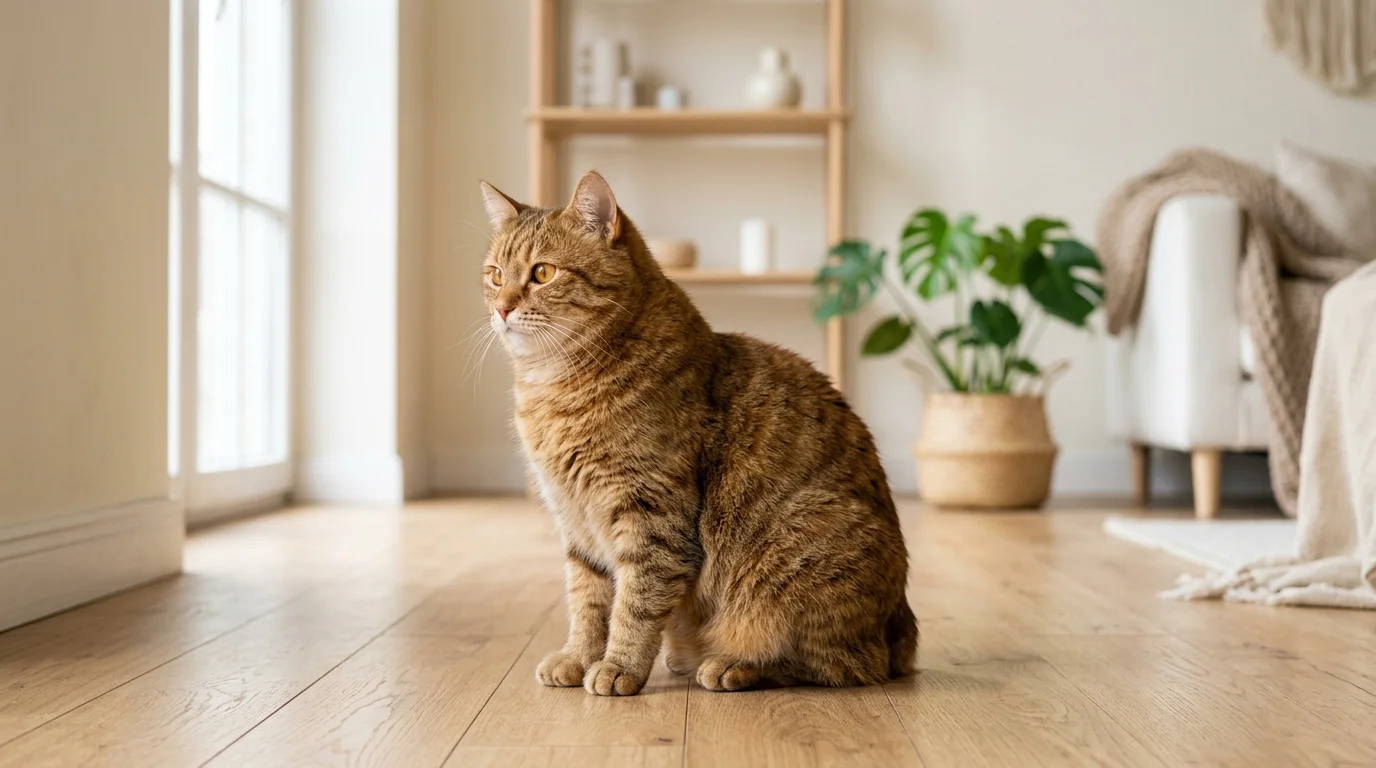
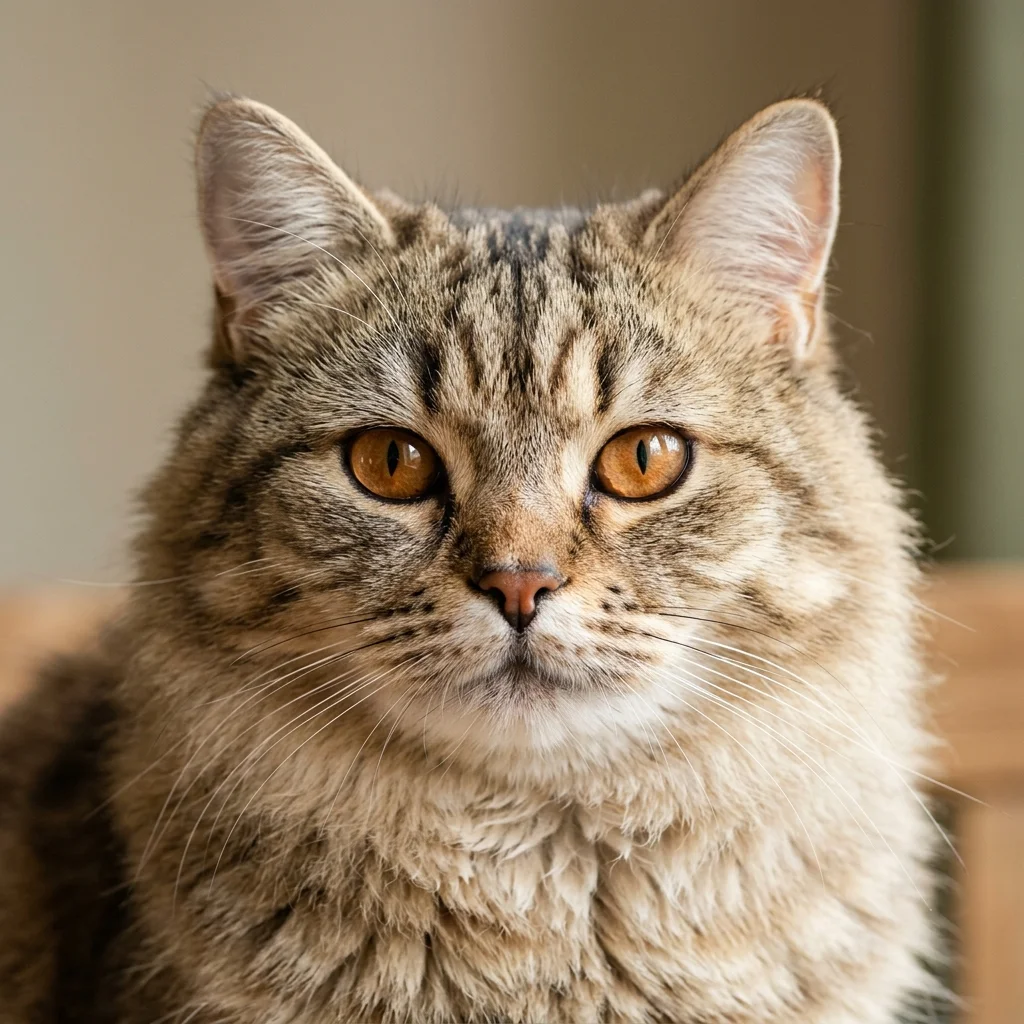
Manx
social, dog-like, loyal, playful
Quick Facts
- Lifespan
- 8-14 years
- Weight
- 3.5-5.5 kg
- Origin
- Isle of Man
- Coat
- Short
Overview
The Manx is an ancient breed from the Isle of Man, instantly recognisable by its characteristic taillessness — or near-taillessness. Beyond this distinctive feature, the Manx is a sturdy, dog-like companion with a playful, loyal, and affectionate nature. This breed has been a favourite on its home island and in cat shows since the 1800s, and its unique genetic heritage continues to fascinate cat enthusiasts worldwide.
History & Origins
The Manx originated on the Isle of Man, a small island in the Irish Sea between Britain and Ireland, where tailless cats have been documented since at least the 18th century. The tailless mutation is believed to have arisen spontaneously on the island and spread rapidly through the isolated cat population.
Numerous legends surround the breed — including the story that the Manx was the last animal to board Noah's Ark and had its tail caught in the closing door. In reality, the taillessness is caused by a naturally occurring dominant mutation.
Manx cats were among the founding breeds exhibited at the first major cat shows in Britain in the 1870s and 1880s. The CFA accepted the Manx as one of its founding breed registrations in 1906. TICA recognised the breed in 1979.
Appearance
The most immediately obvious feature of the Manx is the absence — or near-absence — of a tail. Manx cats are classified by tail length: "rumpies" are completely tailless; "risers" have a small rise of bone at the base; "stumpies" have a short, moveable tail stump; and "longies" have a near-normal tail length.
The body is compact and muscular with a rounded rump that sits higher than the shoulders, giving the cat a distinctive raised-hindquarters profile. The hind legs are noticeably longer than the front legs, creating a characteristic bunny-hop gait when running. The head is large and round with prominent cheeks.
The double coat comes in both short and long (Cymric) varieties, in virtually all colours and patterns. Adults typically weigh 3.5–5.5 kg.
Temperament
Manx cats are exceptionally social, loyal, and playful — traits that have earned them the nickname "the dog of the cat world." They form strong bonds with their family members and are known for following their owners from room to room, greeting visitors, and even learning to fetch and respond to their names.
They are active and alert, with well-developed hunting instincts. Despite their energy, Manx cats are gentle and patient with children and generally accepting of other pets. They tend to be protective of their home and may watch windows and doors with proprietary interest.
Manx cats are neither overly demanding nor particularly vocal. They are affectionate without being clingy — happy to curl up with their family in the evening but equally content to entertain themselves during the day.
Activity & Play
Activity and Exercise Needs
Despite its stocky, rounded build, the Manx is a surprisingly energetic and agile cat. Its powerful hindquarters give it a distinctly rabbit-like gait and remarkable jumping ability. Owners are often caught off guard by how athletic this breed can be.
Energy Level
Manx cats sit at a moderate to high energy level. They enjoy bursts of intense activity followed by comfortable rest periods. They are playful well into adulthood but typically mellow a little more than high-strung breeds.
Daily Exercise
Plan for 15 to 25 minutes of interactive play per day. Two shorter sessions work better than one long session for maintaining engagement and preventing fatigue-related grumpiness.
Play Styles
The Manx has strong hunting instincts and enjoys chasing, pouncing, and stalking. Wand toys, toy mice, and balls are favourites. Many Manx cats enjoy fetch and will carry toys back to their owners. Their powerful back legs make them enthusiastic jumpers -- a fact worth accounting for in play sessions.
Enrichment
Puzzle feeders and interactive toys keep the Manx mentally stimulated on quieter days. Crinkle tunnels and paper bags provide low-cost entertainment. The breed is curious and enjoys investigating new objects left in its environment.
Vertical Space
Manx cats love to climb and perch at height despite their compact build. A solid cat tree or a few wall-mounted shelves will be used regularly. Their jumping ability means no bookshelf or wardrobe is truly off-limits.
Indoor vs. Outdoor
The Manx thrives indoors but can adapt to supervised outdoor time. Their sociable nature means they may try to follow owners outside, so leash training or a secure garden is advisable.
Grooming
The Manx comes in both shorthaired and longhaired (Cymric) varieties, and grooming requirements differ accordingly. The shorthaired Manx has a thick double coat with a dense undercoat — it benefits from brushing once or twice a week to remove loose hair and keep the coat in good condition.
The longhaired Cymric requires more frequent brushing — three to four times per week — to prevent matting, particularly around the rump area where the coat is thickest. Both varieties shed seasonally and may need more frequent grooming during spring and autumn.
Regular nail trimming, ear cleaning, and dental care complete the grooming routine. The rounded rump of the tailless Manx should be checked periodically for cleanliness, as the lack of a tail can occasionally cause hygiene issues in that area.
Health
The Manx carries a significant genetic health concern: Manx syndrome, caused by the same gene mutation responsible for taillessness. When the spinal cord is shortened too severely, it can cause spina bifida, bowel and bladder dysfunction, and hind limb paralysis. Approximately 20% of Manx cats are affected, and the condition typically becomes apparent by 4 months of age.
Because the tailless gene (M gene) is semi-lethal in homozygous form, breeders never cross two fully tailless ("rumpy") Manx cats together. Kittens with at least a partial tail ("stumpy" or "longy") are generally healthier.
Arthritis, particularly of the shortened spine and hindquarters, is also common in the breed as cats age. Responsible breeders screen litters carefully and cull affected kittens early. Expected lifespan for healthy Manx cats is 9–13 years.
Nutrition
Nutrition
The Manx is a robust, muscular breed that needs balanced nutrition to maintain its compact, powerful physique without becoming overweight. The breed has a tendency to gain weight easily, so portion control is important.
Macronutrient Targets
A high-protein diet with 30 to 35% protein on a dry matter basis supports the Manx's muscle mass. Fat content of 12 to 18% provides energy without excess. Avoid foods that rely heavily on grains or plant-based fillers as the primary protein source.
Wet vs. Dry Food
Wet food is recommended as the foundation of the Manx diet. It provides essential hydration and is generally lower in carbohydrates. Dry food can supplement or be used in puzzle feeders, but should not be the sole diet. Aim for wet food making up at least 50 to 60% of daily intake.
Feeding Frequency
Kittens under 6 months: three to four small meals per day. Adolescents 6 months to 1 year: two to three meals per day. Adults: two measured meals per day. Avoid free feeding; the Manx's appetite regulation is not always reliable.
Breed-Specific Concerns
The Manx is prone to spinal and digestive issues related to the taillessness gene. A diet that supports digestive health -- adequate fibre, high-quality proteins, and no artificial additives -- is advisable. Some Manx cats develop constipation or litter box issues; if these arise, a vet-recommended diet adjustment may help. Monitor weight monthly and reduce portions if the cat begins to feel heavy over the ribs.
Treats
Limit treats to 10% of daily calorie intake. Choose treats with simple, high-quality ingredients and avoid those loaded with fillers.
Family Fit
Family Fit
The Manx is one of the most family-oriented cat breeds. Loyal, gentle, and adaptable, this breed integrates smoothly into a wide variety of household situations.
With Children
Manx cats are an excellent choice for families with children. They are patient, playful, and tolerant of the noise and energy that comes with kids. They enjoy joining in games and are rarely reactive when accidentally startled. Teaching children basic cat-handling etiquette still applies, but the Manx is forgiving by nature.
With Other Cats
The Manx is generally sociable with other cats. It adapts well to multi-cat households, especially when introductions are managed carefully. Same-sex pairings can occasionally be territorial but usually settle with time.
With Dogs
Few breeds get along with dogs as naturally as the Manx. Its confident, even temperament means it rarely backs down from or is intimidated by a friendly dog. Proper introductions remain important, and the dog's prey drive should be assessed before assuming compatibility.
With Elderly Owners
The Manx is a wonderful companion for older adults. It enjoys being close to its owner without being demanding. Its moderate energy level means it is engaged without being overwhelming. The breed's loyalty and affectionate nature make it genuinely comforting company.
Apartment Living
Manx cats adapt well to apartment life. Their indoor-oriented temperament and moderate size make them practical for smaller spaces, provided climbing opportunities and play time are available.
First-Time Owners
The Manx is one of the better choices for first-time cat owners. It is easygoing, adaptable, and communicates its needs clearly without being demanding or high-maintenance.
Fun Facts
- Manx cats have longer hind legs than front legs, giving them a distinctive "bunny-hop" gait when they run at full speed.
- Folklore says the Manx lost its tail when Noah closed the Ark door — in reality, the tailless trait is a spontaneous genetic mutation that arose and spread on the Isle of Man.
- The longhaired version of the Manx has its own name: the Cymric (pronounced "KIM-rick"), named after the Welsh word for Wales.
- Manx cats are historically prized as ship's cats for their hunting ability, and were commonly kept aboard vessels sailing from the Isle of Man.
- Because two tailless ("rumpy") Manx cats cannot be safely bred together, every litter contains a mix of tail lengths — from fully tailless to nearly full-tailed.
FAQ
Frequently Asked Questions
How long do Manx cats live?
Manx cats typically live 12 to 16 years. Well-cared-for indoor Manx cats regularly reach the middle to upper end of this range.
Do Manx cats shed a lot?
Shedding depends on coat type. Shorthaired Manx shed moderately year-round with a heavier shed in spring. Longhaired Manx (sometimes called Cymric) shed more and require more frequent brushing. Weekly grooming manages shedding for both types.
Are Manx cats vocal?
Manx cats are moderately vocal. They communicate with soft trills and chirps rather than loud meows. They will alert you to empty food bowls or desire for attention but are not persistently noisy.
Are Manx cats good with dogs?
Yes. The Manx is one of the cat breeds most reliably comfortable around dogs. Their confident, even-tempered nature means they rarely show fear aggression. Proper introduction is still essential, especially with high-prey-drive breeds.
What is Manx syndrome?
Manx syndrome is a condition caused by the same taillessness gene that defines the breed. In severely affected cats, the spine is too short, leading to problems with the spinal cord, bladder, bowel, or digestion. Responsible breeders screen for this and affected kittens are not placed. A Manx from a reputable breeder has a low risk of developing full Manx syndrome.
How much does a Manx kitten cost?
Kittens from registered breeders typically cost between $500 and $1,500 USD. Price varies by coat length, taillessness type, and breeder reputation. Adoption through a rescue is a cost-effective alternative.
Gallery
Explore more Manx-style breeds
Browse related breeds or take our matching quiz to find the right fit for your home.
Stay in the loop
Get weekly breed spotlights, care guides, and new additions - straight to your inbox.