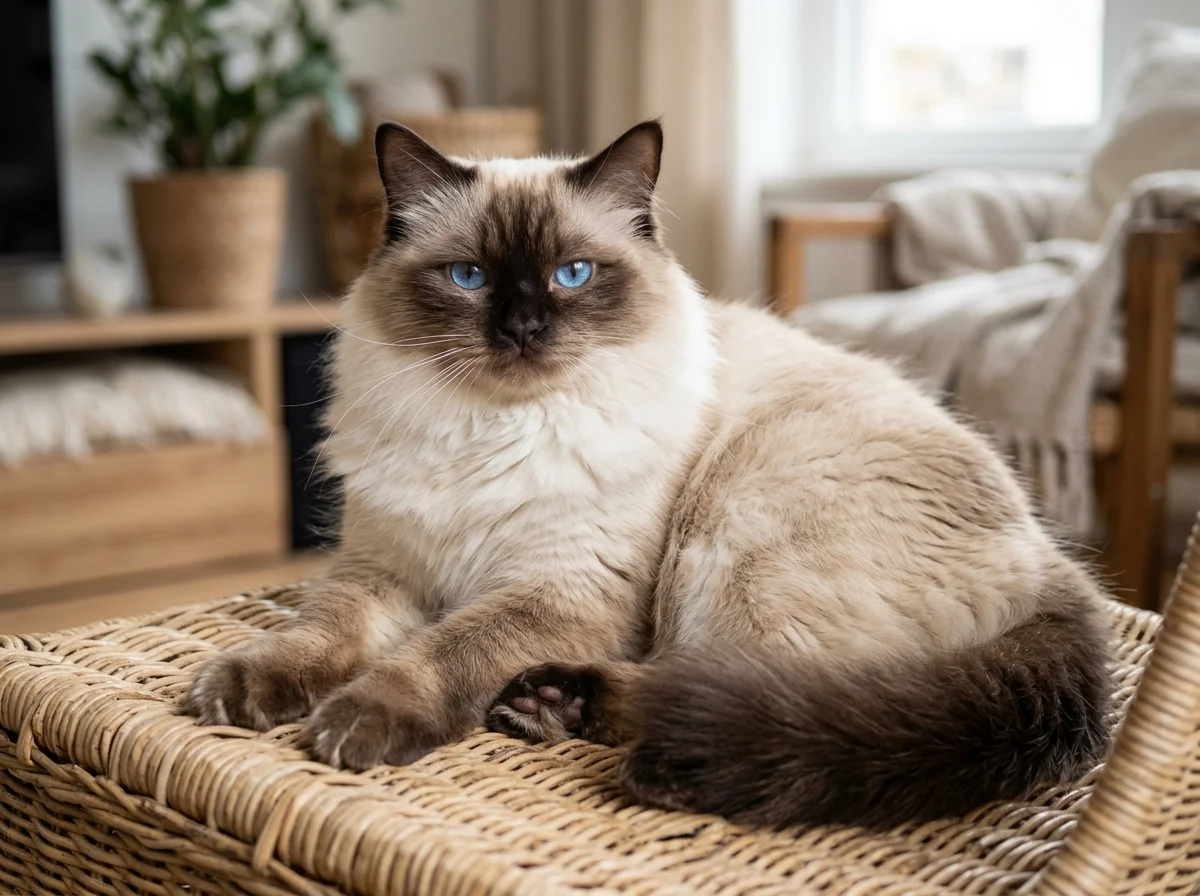
Ragdoll
docile, affectionate, dog-like, gentle
Quick Facts
- Lifespan
- 9-15 years
- Weight
- 3.6-9.1 kg
- Origin
- United States
- Coat
- Long
Overview
The Ragdoll is one of the largest domestic cat breeds in the world, famous for a remarkable trait: when picked up, they go limp and relaxed in your arms. This endearing quality, combined with their striking blue eyes and gentle nature, has made them one of the most popular breeds globally.
Ragdolls are "puppy cats" in the truest sense. They greet their owners at the door, follow them from room to room, and actively seek out laps and cuddles. Unlike many cats that tolerate affection on their own terms, Ragdolls genuinely enjoy being held, carried, and cuddled for extended periods.
Despite their large size (males can reach 9 kg), Ragdolls are remarkably gentle and easygoing. They are not highly active or demanding cats, making them well-suited to quieter households, apartments, and families who want a calm, loving companion rather than an energetic playmate.
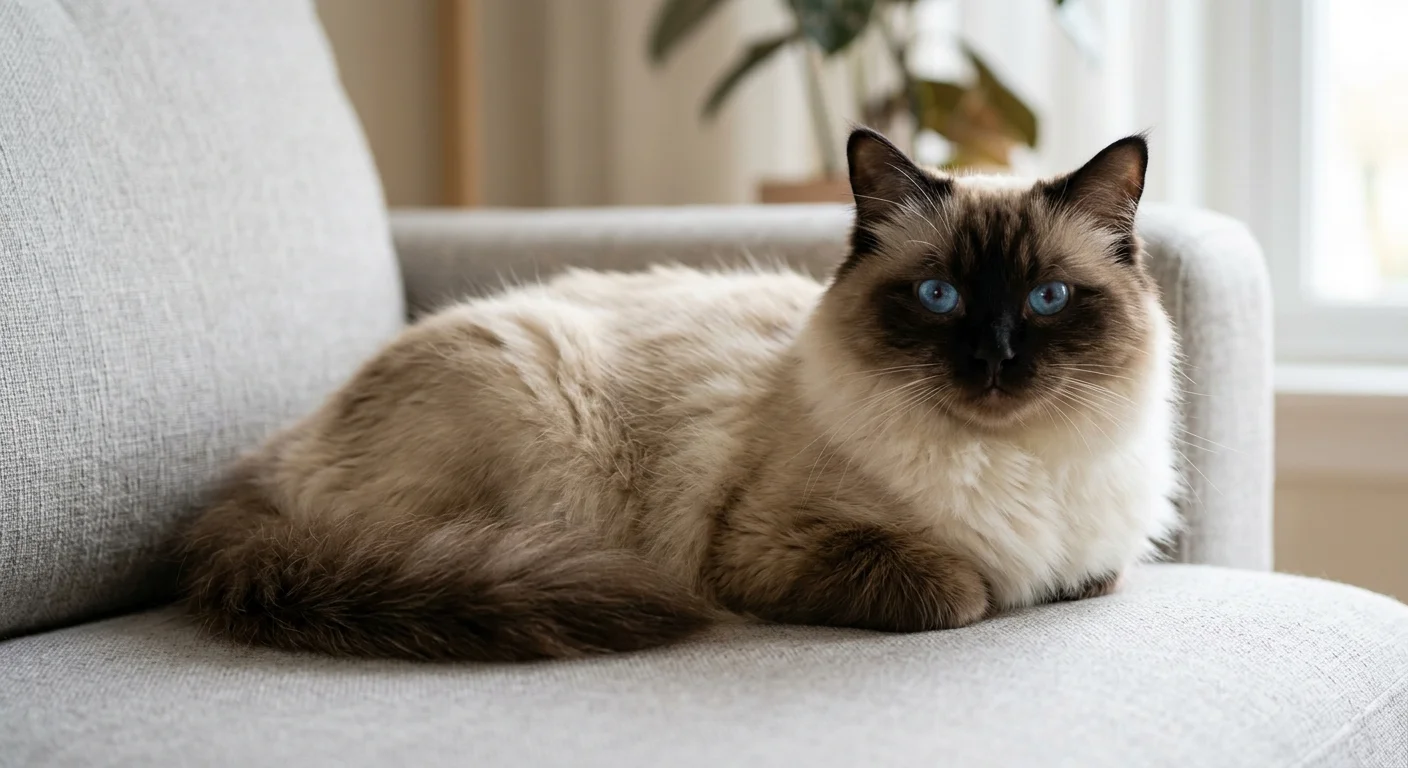
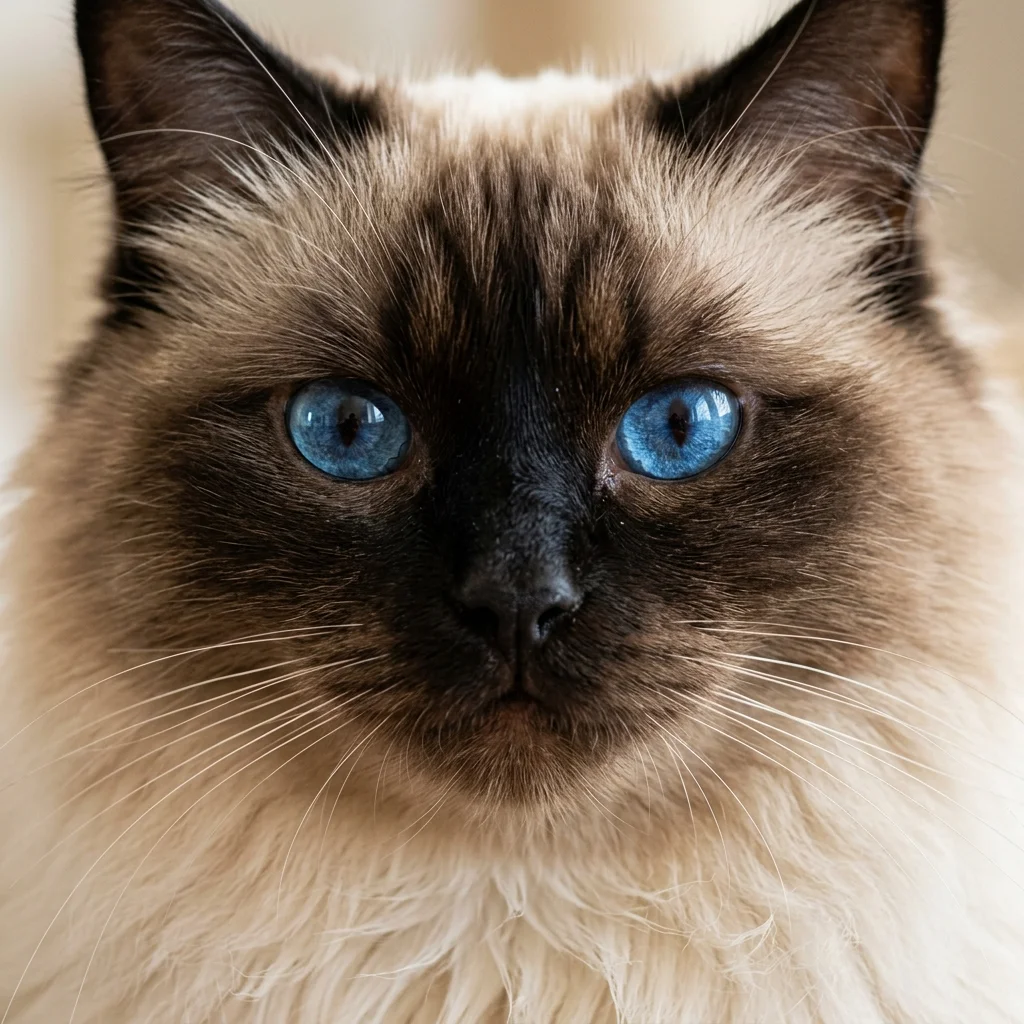
Their semi-long silky coat, always paired with those unmistakeable blue eyes, gives them a look of serene beauty. Ragdolls come in pointed patterns: colourpoint, mitted, bicolour, and van, in seal, blue, chocolate, lilac, red, and cream colourways.
Ragdolls thrive as indoor cats. Their trusting, docile nature leaves them poorly equipped to handle the dangers of free-roaming outdoor life, but they still benefit from controlled outdoor time. A secure catio, an enclosed garden, or short leash walks once they are comfortable with a harness all work well and keep them mentally stimulated.
History & Origins
The Ragdoll is a surprisingly recent breed with an origin story as unusual as the cat itself. The breed was created in Riverside, California in the 1960s by Ann Baker, a Persian cat breeder with a flair for the theatrical.
The foundation cat was Josephine: a free-roaming white longhaired cat of uncertain ancestry, possibly with Persian, Birman, or Angora heritage. After Josephine survived a road accident, Baker noticed that her subsequent litters produced unusually calm, docile kittens that went limp when handled. Baker believed this trait had been caused by the trauma of the accident, a claim that has no scientific basis but became part of the breed's mythology.
Baker selectively bred Josephine's offspring for their laid-back temperament, blue eyes, and colourpointed coat. She trademarked the name "Ragdoll" in 1975 and established strict franchise-style breeding contracts that controlled how others could breed and sell Ragdolls. This created significant conflict within the breeding community, and in 1975, a group of breeders broke away to develop the breed under more conventional registry systems.
The Ragdoll was accepted by the Cat Fanciers' Association (CFA) in 2000 and by TICA (The International Cat Association) earlier. Today, the Ragdoll consistently ranks as one of the most popular breeds worldwide: a remarkable achievement for a breed just six decades old.
Despite its unusual origin story, the Ragdoll's calm temperament is now well-established genetically and does not require any traumatic origin to explain it.
Appearance
Ragdolls are large, semi-longhaired cats with a distinctive pointed coat pattern, always paired with brilliant blue eyes. It is the one physical trait shared by all Ragdolls without exception: every Ragdoll, regardless of colour or pattern, has blue eyes.
Males are substantially larger than females, weighing 6.8-9.1 kg (15-20 lbs) at full maturity, while females typically reach 4.5-6.8 kg (10-15 lbs). Like Maine Coons, Ragdolls mature slowly and may not reach full size until 3-4 years of age.
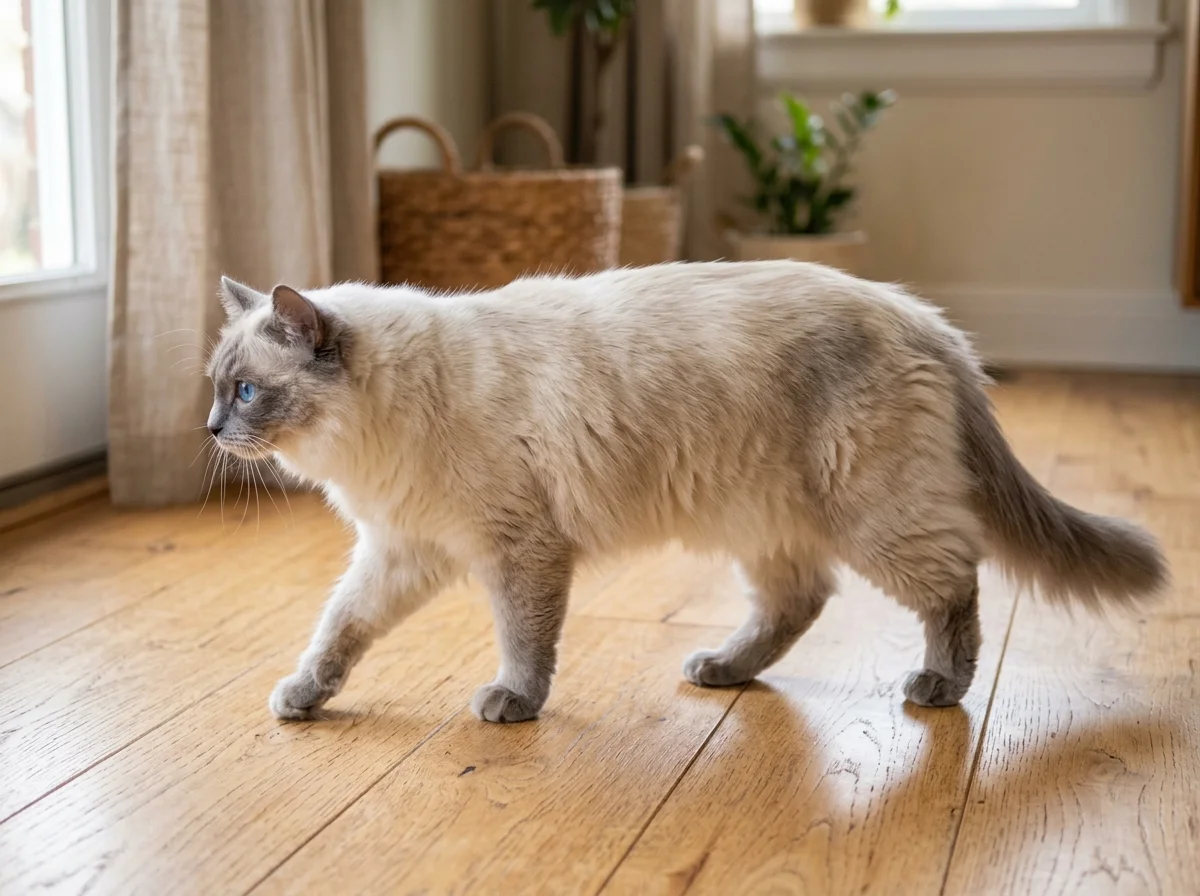
The body is large and muscular with a broad chest, a sturdy frame, and notably large paws. Despite their bulk, Ragdolls move with a certain fluid grace. They are not particularly agile or athletic cats, but they carry their size with an unhurried confidence.
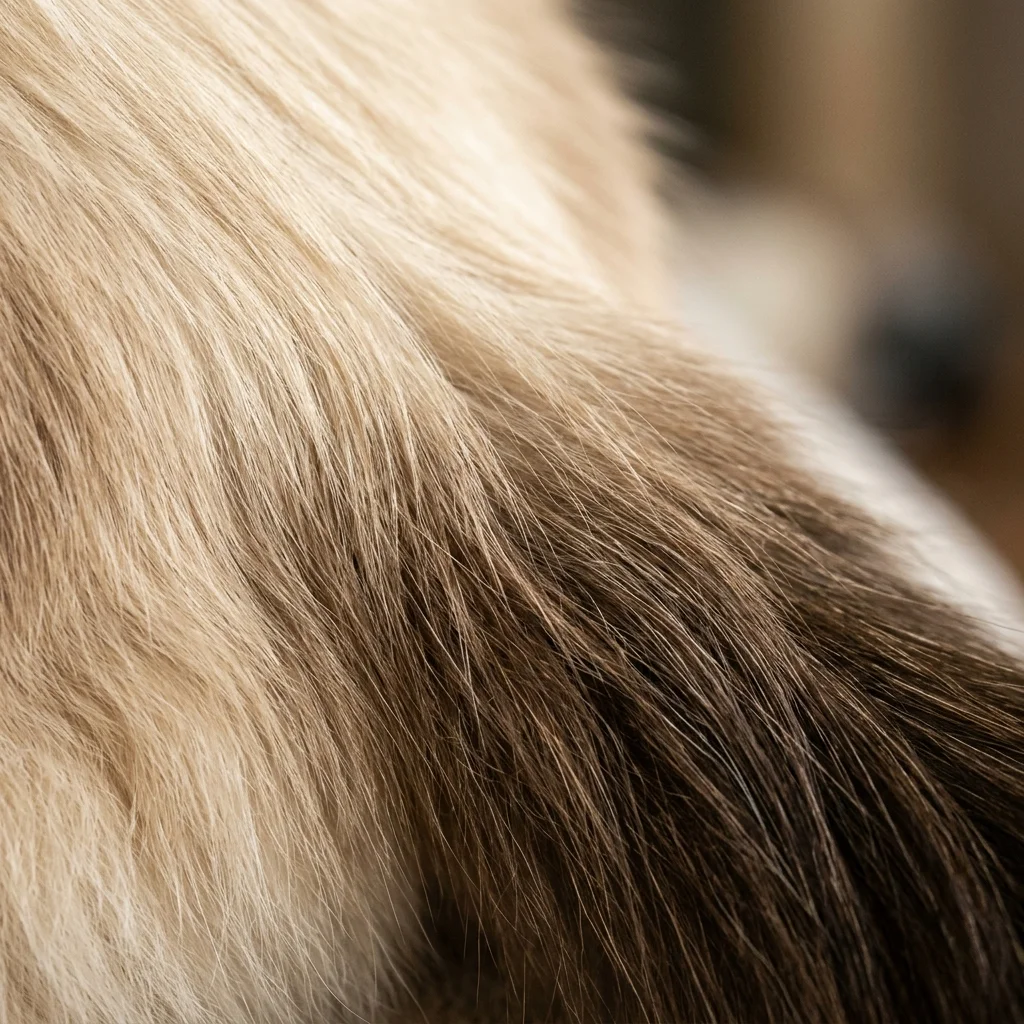
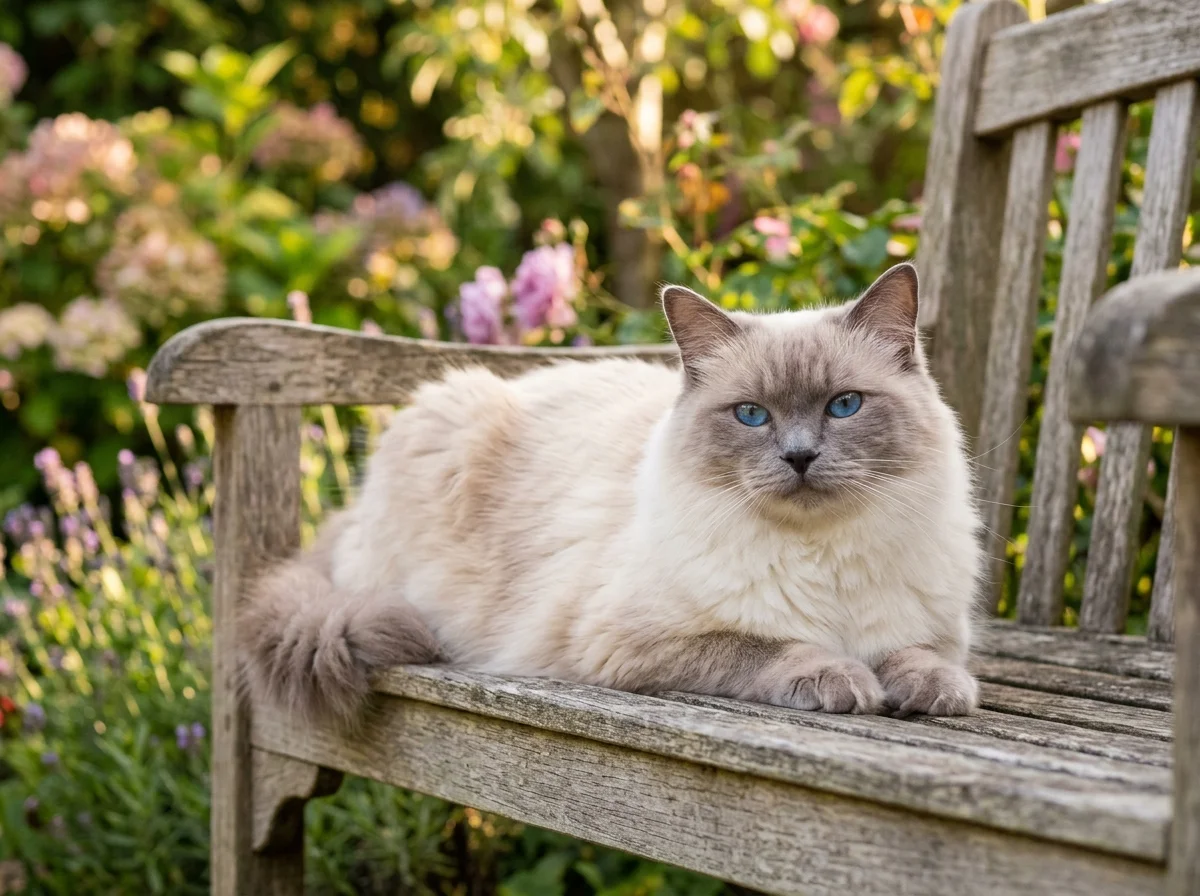
The coat is semi-long, silky, and notably low-maintenance for a longhaired breed. Unlike many longhaired cats, Ragdolls have minimal undercoat, which means less matting and easier grooming. The fur is densest around the neck (forming a ruff), on the tail, and on the rear legs.
Ragdolls come in four recognised patterns: colourpoint (dark face, ears, legs and tail), mitted (colourpoint with white paws), bicolour (inverted V of white on the face), and van (mostly white with colour only on head and tail). Accepted colours include seal, blue, chocolate, lilac, red, and cream, as well as lynx (tabby) and tortie variations.
Temperament
Ragdolls are one of the gentlest, most affectionate breeds in the domestic cat world. Their signature trait (going limp when picked up) is not just a charming quirk but an expression of their deep comfort with human contact and their genuinely relaxed disposition.
Often called "puppy cats," Ragdolls follow their owners around the house with quiet devotion. They will greet you at the door, sit next to you on the sofa, and wait outside the bathroom door. Not out of anxiety, but out of genuine enjoyment of your company. Most Ragdolls are active lap-seekers who will settle in for extended cuddling sessions.
Despite their social nature, Ragdolls are not demanding or vocal. They are quiet cats: their vocalisations are soft and infrequent. They do not typically engage in the attention-seeking behaviours associated with more active breeds. Their wants are simple: proximity, affection, and comfort.
Ragdolls are notably patient with children and remarkably tolerant of handling that would provoke most cats. Their docile nature means they are unlikely to scratch or bite even when overstimulated. That said, it is still important to teach children to respect the cat's boundaries. This tolerance is one of the reasons Ragdolls are so consistently recommended as family pets.
Their trusting, gentle nature does come with one important caveat: Ragdolls do best as indoor cats. Their docility and lack of defensiveness make them poorly equipped to navigate free-roaming hazards like traffic and other animals. A secure catio, enclosed garden, or harness-and-leash walks are a great way to give them fresh air and enrichment safely.
Activity & Play
Ragdolls are a low-to-moderate activity breed. They are not particularly athletic or high-energy cats. They spend much of the day in a state of relaxed contentment near their people. Do not expect a Ragdoll to leap dramatically between high shelves or engage in frantic solo play sessions. They are far more likely to be found on the sofa than the cat tree.
That said, Ragdolls still benefit from and enjoy daily play. Interactive sessions of 20-30 minutes are recommended to maintain a healthy weight and provide mental stimulation. Feather wands, soft toys, and gentle chase games suit their play style well. Puzzle feeders can add useful mental engagement without requiring significant physical exertion.
Ragdolls rarely jump to high places and are not strong climbers by instinct. They tend to stay at floor or furniture level. Low cat trees and comfortable perches near windows are more useful than towering climbing structures.
Due to their low activity level and tendency to overeat if given free access to food, Ragdolls are prone to obesity. Measured meal feeding rather than free-feeding is strongly recommended.
Ragdolls should live indoors and never be allowed to roam outside unsupervised. Their trusting, non-defensive nature makes them easy targets for other animals and poorly prepared for road traffic. A secure catio, a cat-proofed garden, or short harness-and-leash sessions are ideal ways to give them outdoor stimulation safely.
Grooming
Despite their semi-long coat and impressive size, Ragdolls are one of the more manageable longhaired breeds to groom. The key reason is their minimal undercoat. Unlike the Maine Coon or Persian, Ragdolls have a single-layer silky coat that is far less prone to matting.
Brushing two to three times per week is sufficient for most of the year, using a stainless steel comb to work through the coat and a soft slicker brush to finish. During the spring and autumn shedding seasons, daily brushing is recommended to manage the increased hair loss and prevent any tangles from taking hold.
Focus grooming attention on areas where tangles can develop: the neck ruff, behind the ears, the armpits, and the fur on the hindquarters and tail. These areas are dense enough to catch loose fur and form mats if left unattended.
Shedding is moderate but noticeable, particularly during seasonal changes. Regular grooming sessions double as bonding time. Most Ragdolls actively enjoy being combed and will purr through the entire process, making grooming a pleasure rather than a battle.
Complete the routine with regular nail trimming every two to three weeks, weekly ear checks, and teeth brushing as often as possible. Like all cats, Ragdolls are susceptible to periodontal disease, and early dental habits pay dividends in later life.
Health
Ragdolls are generally a healthy and long-lived breed. Like all pedigree cats, they carry certain genetic predispositions that owners should know about.
The most significant concern is hypertrophic cardiomyopathy (HCM), the most common form of heart disease in cats. Around 29% of Ragdolls carry the R820W mutation in the MYBPC3 gene, with roughly 5% homozygous, making cardiac screening essential. Reputable breeders should provide HCM test results for both parents, and Ragdoll owners should arrange regular echocardiograms, typically from age two onwards, and annually from middle age.
Ragdolls also have a heightened susceptibility to feline infectious peritonitis (FIP), a serious viral disease. While there is no reliable prevention for FIP beyond minimising exposure to FCoV (feline coronavirus) in multi-cat environments, breeders and owners should be aware of the breed's increased risk.
Urinary tract issues can occur in Ragdolls, and ensuring adequate daily water intake (ideally via wet food or a water fountain) is a useful preventive measure throughout their life.
Ragdolls are prone to obesity due to their low activity level and easy-going appetite. Weight management through measured feeding is important, as excess weight compounds joint stress and increases cardiovascular risk.
With proper care, Ragdolls typically live 12-15 years, with many reaching their late teens in good health. Annual veterinary check-ups with cardiac evaluation are strongly recommended from early adulthood.
Nutrition
Ragdolls are obligate carnivores who require a high-protein, animal-based diet throughout all life stages. A Ragdoll's meals should replicate the nutritional profile of natural feline prey: over 50% animal proteins, around 20% fats, and no more than 3% carbohydrates on a dry matter basis. Protein targets of 40-45% dry matter basis are optimal for maintaining the breed's characteristic muscle mass.
Wet food should form a significant part of the diet, as moisture intake is critical for Ragdoll health. The breed has a tendency toward urinary tract issues, and adequate hydration (whether through wet food, water fountains, or both) is one of the most effective preventive measures available.
Due to their relatively low activity level, Ragdolls have a slower metabolic rate than more active breeds. They require approximately 40-42 calories per kilogram of body weight per day. Measured meal feeding rather than free-feeding is strongly recommended, as Ragdolls tend to overeat when given unlimited access to food, leading to obesity.
Ensure the diet includes adequate taurine for heart health, and choose foods appropriate to the cat's life stage: kitten food until 12-18 months, adult food thereafter, and senior formulations from around age 10 to support kidney and joint health.
Ragdoll kittens grow slowly and should not be rushed onto adult food. Maintaining kitten-appropriate nutrition through the first year supports healthy development of their musculoskeletal structure.
Family Fit
Ragdolls are one of the most consistently recommended breeds for families, and with good reason. Their docile, patient temperament, low aggression threshold, and genuine enjoyment of human company make them excellent companions for households of almost any composition.
With children: Ragdolls are remarkably tolerant with children, including young children who may handle them clumsily. Their relaxed, non-defensive nature means they are unlikely to scratch or bite when overstimulated. They are far more likely to simply stay limp and wait for the handling to stop. However, their trusting nature also means they need protection: teach children from an early age to handle the cat gently and respectfully.
With other cats: Ragdolls typically integrate well with other cats, particularly other Ragdolls or gentle breeds. They are not aggressive or territorial, and a carefully managed introduction usually results in peaceful cohabitation. They benefit from feline company given their social nature.
With dogs: Most Ragdolls do well with dogs, particularly dog breeds with calm temperaments. Their docility means they are unlikely to provoke confrontations, but their trusting nature also means they will not necessarily defend themselves if a dog behaves badly. Supervision during introduction is important.
Apartment vs. house: Ragdolls are ideally suited to apartment living. They are not climbers, not highly active, and not prone to destructive behaviour from boredom. A comfortable, quiet apartment with a lap to sit on is a Ragdoll's idea of paradise. They should live indoors, but a balcony catio or supervised harness walks are a welcome bonus if you can offer them.
Fun Facts
All Ragdolls have blue eyes, without exception. The blue colouration is linked to the same temperature-sensitive tyrosinase gene mutation that produces their pointed coat pattern, and no registered Ragdoll can have any other eye colour.
The longest-lived Janus cat (a cat born with two faces due to a rare condition) was a Ragdoll named Frank and Louie, who lived to 15 years despite his extraordinary anatomy, making it into the Guinness World Records.
Ragdolls are one of only two domestic cat breeds that regularly rival the Maine Coon in size. Males can weigh up to 9 kg, making them one of the heaviest domestic cat breeds in the world.
The Ragdoll's signature "going limp" behaviour (the trait that inspired its name) is a genuine physiological response, not trained behaviour. It appears to be a hardwired breed trait passed down from the original breeding stock.
Ragdolls were formally accepted by the Cat Fanciers' Association (CFA) in 2000, making them a relatively recent addition to mainstream pedigree cat recognition despite the breed's 1960s origins.
The breed was created in California in the 1960s, making it one of the few recognised breeds to have a known, documented founder (Ann Baker) rather than a gradual natural development.
FAQ
Q: Do Ragdolls really go limp when you pick them up? A: Yes. It is a genuine trait, not something trained into them. Ragdolls have an unusually relaxed muscle response when handled, causing their bodies to go noticeably soft and floppy. It is one of the breed's most distinctive and endearing characteristics.
Q: Are Ragdolls good with children? A: Yes, Ragdolls are one of the best breeds for families with children. They are patient, tolerant, and rarely aggressive. However, their trusting nature means they may not defend themselves if treated badly. It is important to teach children how to handle them gently.
Q: Are Ragdolls hypoallergenic? A: No. Ragdolls produce Fel d 1 allergen like all cats. Their minimal undercoat means slightly less dander dispersal than heavy-shedding breeds, but they are not hypoallergenic and will affect most cat-allergic people.
Q: Can Ragdolls go outside? A: Ragdolls should live as indoor cats. Free-roaming outside is too dangerous for such a trusting, non-defensive breed. A secure catio, enclosed garden, or harness-and-leash walks are all good ways to give them outdoor stimulation without the risks.
Q: How long do Ragdolls live? A: The average lifespan is 12-15 years, with many healthy individuals living into their late teens. The primary health concern is hypertrophic cardiomyopathy (HCM), so regular cardiac screening is important.
Q: Do Ragdolls shed a lot? A: Moderately. Ragdolls shed more during seasonal changes but shed less than many other longhaired breeds due to their minimal undercoat. Brushing two to three times per week keeps shedding manageable.
Q: Are Ragdolls suitable for apartment living? A: Yes. Ragdolls are one of the best breeds for apartment living. They are calm, not destructive, not athletic climbers, and content with indoor life provided they have companionship and comfort.
Gallery
Explore more Ragdoll-style breeds
Browse related breeds or take our matching quiz to find the right fit for your home.
Stay in the loop
Get weekly breed spotlights, care guides, and new additions - straight to your inbox.