Sphynx
extroverted, energetic, affectionate, curious
Quick Facts
- Lifespan
- 8-14 years
- Weight
- 3.5-7 kg
- Origin
- Canada
- Coat
- Hairless
Overview
The Sphynx is one of the most instantly recognisable cat breeds in the world, and one of the most misunderstood. Despite its hairless appearance, the Sphynx is not cold, not fragile, and not aloof. It radiates body heat like a small living heater and is, by most measures, one of the warmest-natured and most sociable cats in existence.
Extroverted, clownish, and intensely affectionate, Sphynx cats are social animals who thrive on human attention, company, and interaction. They greet visitors at the door, climb onto laps uninvited, insert themselves into activities, and maintain a running commentary on household life through a variety of chirps, trills, and vocalisations. Being left alone for long periods does not suit them at all.
The breed's lack of coat is caused by a natural genetic mutation affecting hair follicle development. The skin is warm and soft to the touch, with a texture often compared to chamois leather or warm suede. Far from being hypoallergenic, Sphynx cats produce the same Fel d 1 protein as any other cat, concentrated in their skin oils rather than coat, which makes them unsuitable for allergy sufferers.
Sphynx are medium-sized, muscular cats that feel surprisingly heavy and solid when held. Males typically weigh 3.5 to 5.5 kg; females 2.7 to 4.5 kg. They are a long-bodied breed with a barrel chest, long neck, and powerful hindquarters. Their elevated metabolism means they require more food than most cats their size, and generate more body heat.
The Sphynx is emphatically an indoor-only cat. Without the insulation and UV protection of a coat, they are vulnerable to sunburn, heat loss in cold weather, and a range of skin issues if not properly managed. With good care, their typical lifespan is 9 to 15 years.
History & Origins
The Sphynx breed traces its origins to a single spontaneous genetic mutation. In 1966, a domestic cat in Toronto, Canada, gave birth to a hairless kitten named Prune. This kitten and its mother were acquired and used to establish a breeding programme, which gave the breed its initial, informal name: the Canadian Hairless.
Early breeding efforts were challenging. The gene pool was extremely limited, and attempts to breed back to Prune's offspring with outcrossed domestic cats produced inconsistent results. The initial breeding line struggled with health issues related to the narrow gene pool and the breed nearly died out in the 1970s before new foundation animals were found.
In 1975 and 1976, additional naturally hairless cats were discovered: Epidermis and Dermis were found in Minnesota, and later Bambi, Punkie, and Paloma in Toronto. These cats were incorporated into the breeding programme alongside American Shorthairs to improve genetic diversity and health. An important later contribution came through careful outcrossing to Devon Rex cats, which carry a related but genetically distinct coat mutation. Devon Rex outcrossing helped widen the gene pool and strengthen the breed's overall constitution.
TICA recognised the Sphynx in the 1980s. The CFA accepted Sphynx for registration in 1998 and granted full Championship status in 2002. The Sphynx is now fully recognised by all major international cat registries.
Contemporary Sphynx are bred to a rigorous standard that prioritises health, temperament, and the correct coat texture. Ongoing outcrossing to Devon Rex remains part of some breeding programmes to maintain genetic health.
Appearance
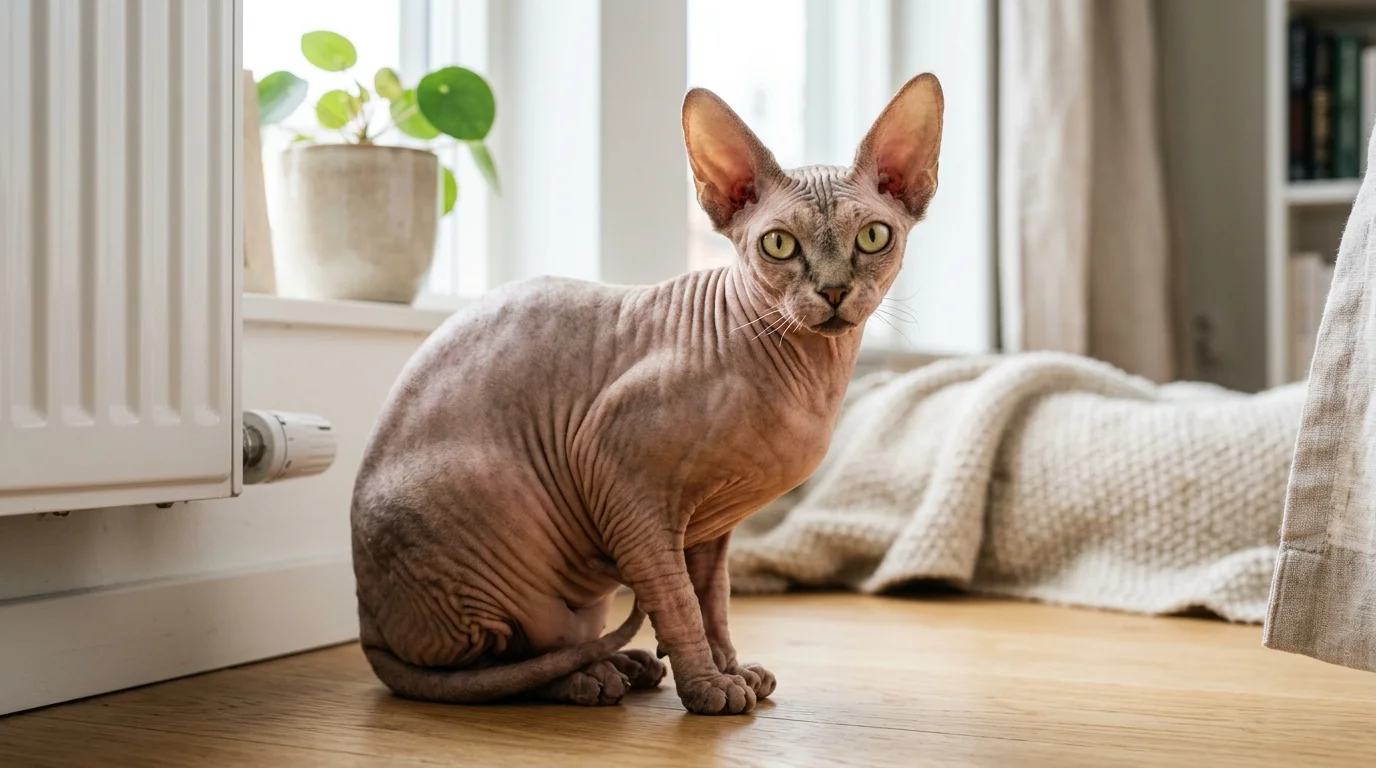
The Sphynx is a medium-sized, powerfully built cat that consistently surprises people when picked up: despite its slender visual silhouette, the breed feels dense and surprisingly heavy. The body is barrel-chested, with a rounded abdomen and strong hindquarters. The skin temperature is noticeably higher than most cats, as there is no insulating fur layer to dissipate the body heat.
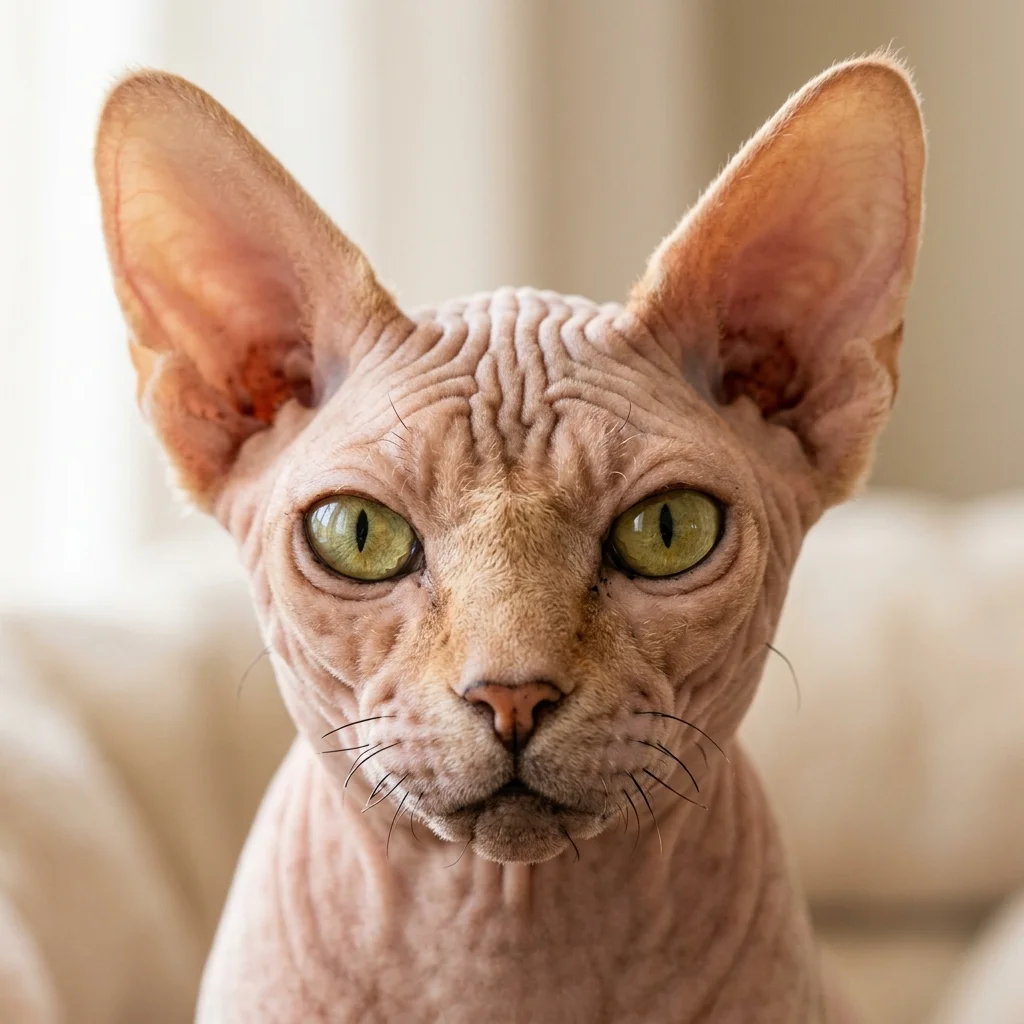
The most immediately striking feature is, of course, the near-hairless skin. The Sphynx is not entirely without coat: a very fine, soft down covers the body, most noticeably on the bridge of the nose, the ears, the tail, and the feet. The overall texture is often described as warm suede or chamois leather. Skin can show considerable wrinkling, particularly on the forehead and around the shoulders, a feature that is considered attractive in breed judging.
Skin colour corresponds to what would be coat colour in a furred cat. Sphynx come in virtually all feline colours and patterns, including solid, tabby, bicolour, tortoiseshell, and colourpoint, all expressed directly on the skin. This means a 'spotted tabby' Sphynx will show the tabby pattern visibly on the skin.
The head is a modified wedge with a short, flat forehead, prominent cheekbones, and a strong chin. The eyes are large and lemon-shaped, set wide apart. The ears are very large and wide-set, with no interior furnishings, giving the breed an alert, almost alien look. The whiskers may be present but are often sparse or absent.
Males typically weigh 3.5 to 5.5 kg; females 2.7 to 4.5 kg. The tail is long and whip-like, occasionally with a small tuft of fur at the tip.
Temperament
Sphynx cats are among the most people-oriented breeds in existence. They are not cats that quietly occupy a room; they are cats that actively occupy their people. A Sphynx wants to be involved in everything, and it will make its wishes known through persistent proximity, vocalisations, and a remarkable willingness to climb onto any available human surface.
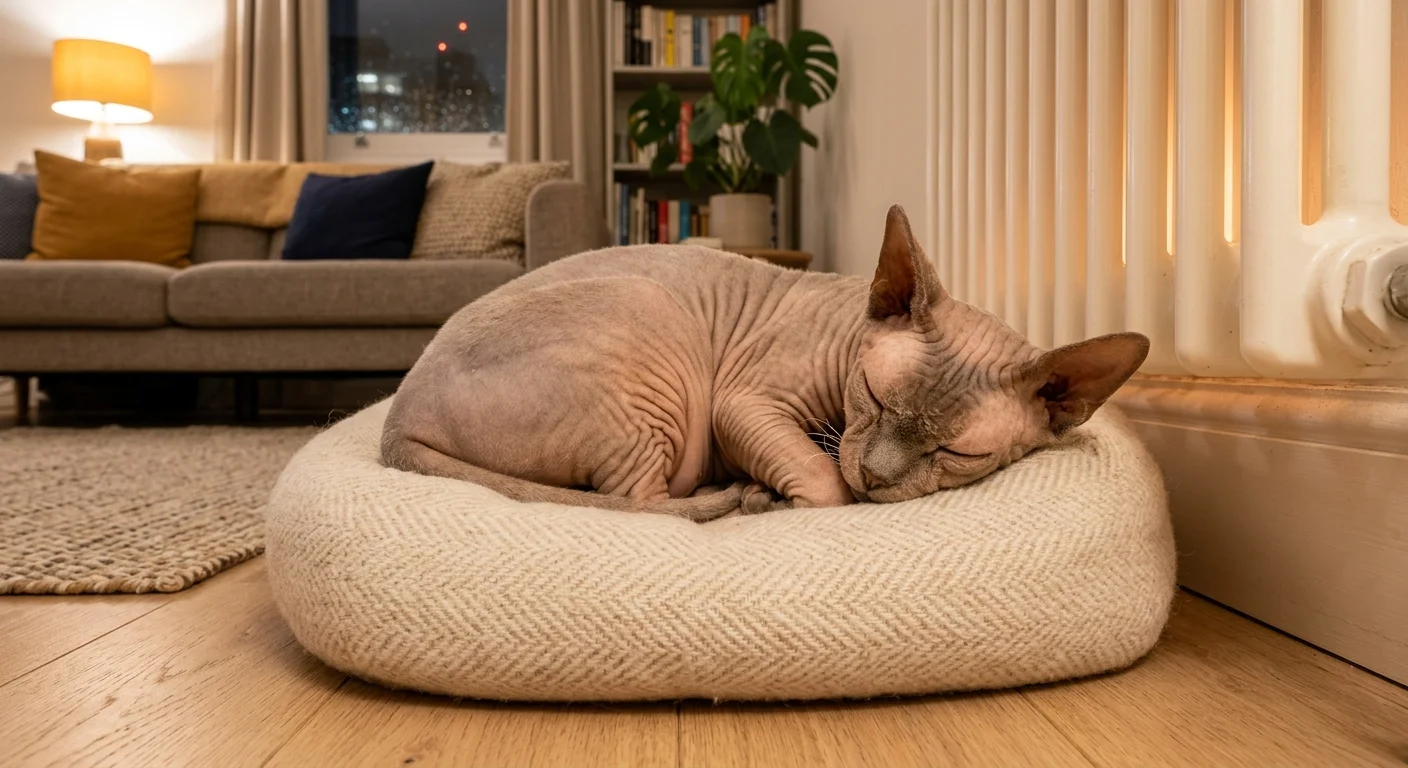
They crave attention and are genuinely unhappy when left alone for long periods. A Sphynx in a household that is empty for most of the day will become anxious, may develop repetitive behaviours, and is strongly recommended to have a feline companion. A second Sphynx or another sociable, active breed is generally the best pairing. Many Sphynx cats sleep in contact with their owners, burrowing under bedcovers for warmth and company.
They are famously dog-like in their devotion. Many Sphynx cats learn their owners' routines, wait by the door before an expected return, greet all visitors with immediate, uninhibited curiosity, and play fetch reliably when motivated. Their energy levels are high, and they remain playful and physically active well into adulthood.
Vocalisation is a significant part of Sphynx communication. They are chatty, expressive cats with a varied repertoire. They are not as loudly insistent as the Siamese, but they are communicative in a persistent, engaging way.
Sphynx cats are excellent with children and other pets. Their outgoing, fearless, and fundamentally good-natured character means they rarely withdraw or become territorial. They approach new people with curiosity rather than caution. This openness is a fundamental trait of the breed that distinguishes them from more reserved cats.
Activity & Play
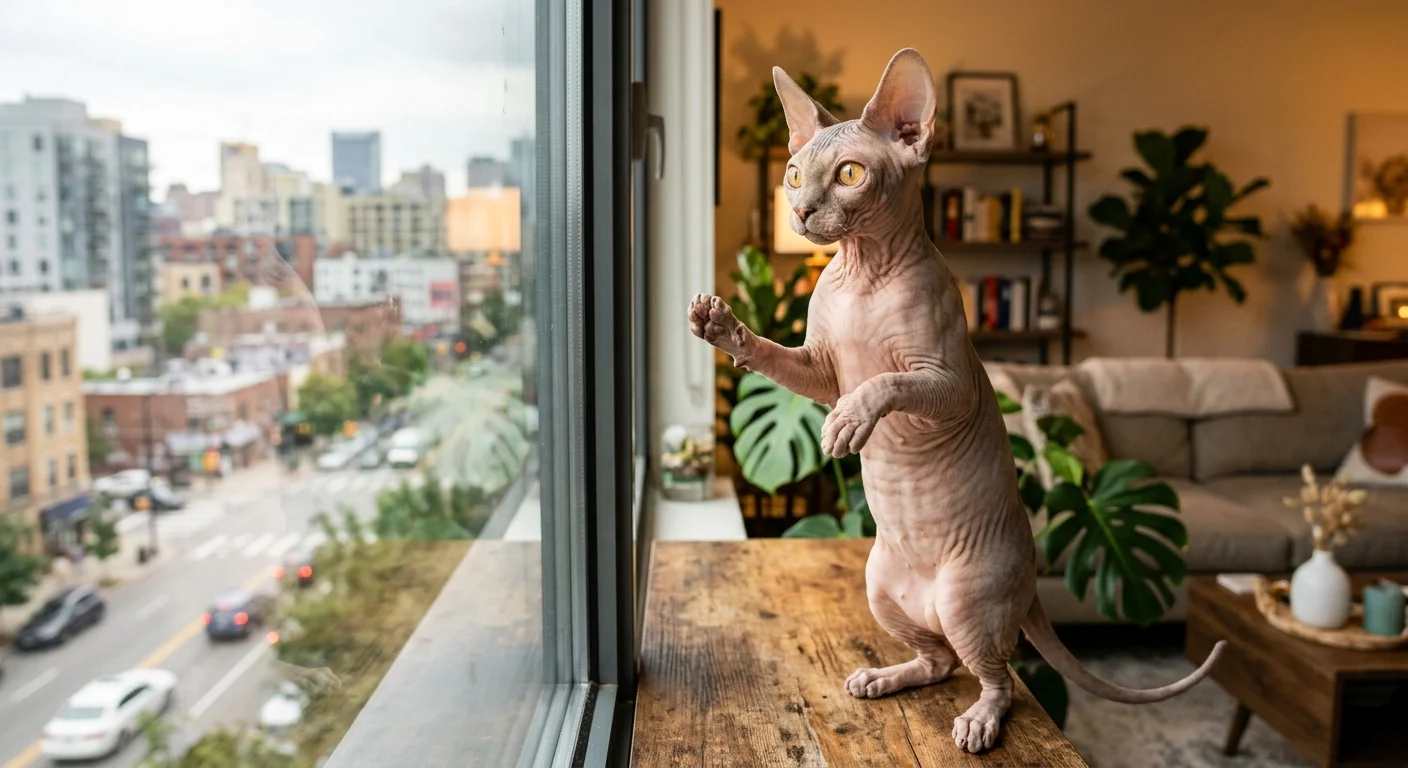
Sphynx cats are highly active and genuinely athletic despite their unconventional appearance. They are energetic, playful, and remain kitten-like well into adulthood. Without a coat to restrict their movement or absorb kinetic energy, their musculature is visibly defined, and they move with a speed and agility that surprises many first-time owners.
Plan for at least two dedicated play sessions per day of 15 minutes or more. Wand toys, feather teasers, and interactive toys that mimic prey movement are highly effective. Sphynx cats are enthusiastic hunters by instinct and will pursue toys with genuine intensity. Many learn to play fetch and will return toys reliably, which becomes a favourite game for both cat and owner.
Vertical space is important. A tall, sturdy cat tree with multiple platforms, hammocks, and climbing opportunities provides essential enrichment. Sphynx cats will use these structures actively, not simply as observation posts.
The Sphynx is strictly an indoor cat. Their lack of coat offers no UV protection from sunburn and no insulation against cold. Unsupervised outdoor access is not safe for this breed. A well-equipped indoor environment with varied toys, climbing structures, and companion animals provides everything a Sphynx needs.
If supervised outdoor access is desired, a secure catio with a warm, sheltered area is a good solution during warmer months. The Sphynx's social nature can make it amenable to harness training if introduced patiently from a young age, though their boldness means they must always be closely supervised outdoors.
Due to their high metabolism and body heat requirements, activity levels and nutritional intake are closely related. An active Sphynx will eat more; a less active one should have food adjusted to avoid weight gain.
Grooming
Sphynx cats require significantly more grooming effort than most coated breeds, which surprises many first-time owners. Without fur to absorb the skin's natural sebaceous oils, those oils accumulate on the skin surface and in skin folds. If not managed regularly, this leads to a greasy, dirty feel and can cause skin irritation, bacterial or yeast infections.
Most Sphynx cats need a bath approximately every one to four weeks, depending on the individual cat's oil production rate and lifestyle. Use a gentle, cat-safe shampoo formulated for sensitive skin and work it thoroughly into all skin folds and crevices. Pay particular attention to the armpits, groin, and any neck folds where sebum collects. Rinse thoroughly and dry the cat completely afterwards, as Sphynx cats lose body heat quickly when damp. A warm towel and a draught-free room are essential for drying.
The ears require weekly cleaning. The large, open ears of the Sphynx collect oily residue and wax at a much faster rate than most coated cats. Use a cotton ball moistened with a vet-approved ear cleaner; clean the visible ear interior gently without probing deep into the ear canal.
Nails grow and accumulate oil around the nail beds more noticeably without coat to absorb it. Trim nails every two weeks and clean the nail bed area gently when bathing. Provide appropriate scratching surfaces.
Dental hygiene is important for all cats. Begin tooth brushing from kittenhood to establish it as a routine; use cat-safe toothpaste and a soft brush or finger brush.
The Sphynx's skin is sensitive to cold, drafts, and direct sunlight. Indoor environments should be warm and comfortable, with cat-safe warm clothing or blankets available for cooler months.
Health
Sphynx cats face a number of health considerations that prospective owners should understand clearly. The breed's health profile is dominated by cardiac concerns, and responsible breeders take this seriously.
Hypertrophic Cardiomyopathy (HCM) is the most significant health concern in the Sphynx. A study published in 2024 found HCM prevalence of approximately 40% in a screened Sphynx population (median age 5.8 years), which is considerably higher than in the general cat population. HCM causes thickening of the heart muscle, reducing its ability to pump effectively, and can lead to congestive heart failure or sudden cardiac events. Responsible breeders screen all breeding cats with annual echocardiograms by a veterinary cardiologist. Annual cardiac screening is also recommended throughout the life of a pet Sphynx. Ask breeders for up-to-date echocardiogram results on both parents.
Mitral Valve Dysplasia is another cardiac condition reported in the breed and may occur independently of or alongside HCM.
Hypoallergenic myth: The Sphynx is not hypoallergenic. The Fel d 1 protein responsible for most cat allergies is produced in the skin's sebaceous glands, not the coat. Without fur to trap it, the protein is more freely distributed on the skin surface and in the environment. Sphynx cats can trigger significant allergic reactions in sensitive individuals.
Skin conditions are a management consideration. Without protective fur, the skin is more susceptible to sunburn, fungal or yeast infections in skin folds, and contact irritation. Indoor living, regular bathing, and vet-grade skin care products mitigate these risks.
Gastrointestinal sensitivity is noted in some Sphynx cats. Their higher metabolic rate and energy turnover can make digestive upsets more apparent. High-quality, easily digestible food is important.
Lifespan: typically 9 to 15 years.
Nutrition
Nutrition for the Sphynx requires more careful attention than for most coated breeds. Without fur, the Sphynx uses a significant proportion of its metabolic energy maintaining body temperature, and their caloric requirements are higher per kilogram of body weight than most domestic cats. Multiple sources, including breed-specialist vets and Royal Canin's Sphynx-specific diet research, confirm that Sphynx cats generally need more food than a similarly sized coated cat.
A high-protein diet with quality animal protein (chicken, turkey, fish) as the primary ingredient is the appropriate foundation. Wet food is strongly recommended as the primary dietary source: it provides high protein, good moisture, and is generally more digestible than dry-only diets. Many Sphynx breeders advocate for a high-meat wet diet or raw feeding, arguing that it best matches the breed's nutritional needs and digestion.
Feed two to three meals per day rather than free-feeding. The higher metabolic rate means some Sphynx do better with three smaller meals to maintain consistent energy levels rather than two larger ones. Monitor body condition closely: despite eating more, Sphynx cats should not be visibly bony or excessively round. A vet-guided body condition assessment is helpful.
Digestive sensitivity is occasionally noted. If your Sphynx experiences recurring digestive upset, a limited-ingredient food or single-protein diet may help identify and manage intolerances. Always rule out medical causes with a vet before changing diet.
Fresh water should always be available. A cat drinking fountain is a good investment, as adequate hydration supports urinary and digestive health. Avoid leaving the Sphynx without access to food for long periods; their metabolic rate means they manage hunger less easily than lower-energy breeds.
Family Fit
The Sphynx is one of the most socially versatile cat breeds for families, with one important caveat: this is a breed that absolutely requires company. A Sphynx that spends most of the day alone will be genuinely stressed, and this is not a suitable breed for households where it would be the only pet in an otherwise empty home during working hours.
With children, the Sphynx is typically magnificent. Their outgoing, fearless nature means they approach children with curiosity and enthusiasm rather than retreating. Children who enjoy active, engaged interaction will find the Sphynx an endless source of entertainment. The breed is tolerant of handling and is generally patient with the unpredictability of younger children, though all child-cat interactions should be supervised and children taught to handle the cat gently and respect when it wants space.
With other cats, the Sphynx is an excellent companion. A second Sphynx is an ideal pairing; their shared energy level, social needs, and thermoregulation habit of sleeping together makes two Sphynx a particularly harmonious combination. Other active, sociable breeds also work well. A timid or strongly solitary cat may find the Sphynx's relentless sociability overwhelming.
With dogs, the Sphynx's boldness and confidence mean they typically hold their own in mixed-species households. Many Sphynx form genuine friendships with friendly dogs, particularly when introduced during the cat's kittenhood. Prey-driven dogs require more careful management, as with any cat.
For households that are active, regularly populated with people, and committed to providing warmth, grooming, and company, the Sphynx is a genuinely exceptional companion. Apartment living is entirely suitable provided the environment is warm, well-equipped, and the cat is not left alone for long stretches.
Fun Facts
1. They are not truly hairless. A fine, soft down covers the Sphynx's body, most noticeably on the ears, muzzle, tail, and feet. The skin has the texture of warm suede or chamois leather rather than being completely smooth.
2. They run warmer than coated cats. Without insulating fur, the Sphynx's skin surface temperature is noticeably higher than that of other cats. This makes them particularly appealing to people who find cats good warm companions, and it is why many Sphynx seek human body heat to supplement their own.
3. They are not hypoallergenic. This is one of the most persistent myths about the breed. Sphynx cats produce the same Fel d 1 protein as any other cat. Without fur to trap it, the protein is actually more freely distributed on the skin surface. People with cat allergies can react just as strongly to a Sphynx as to any other breed.
4. The breed nearly became extinct in the 1970s. After the original Toronto breeding line failed, the breed was saved by the discovery of additional naturally hairless cats in Minnesota and Toronto in the mid-1970s.
5. Their coat pattern shows on the skin. A Sphynx with a tabby or tortoiseshell genetic pattern displays that pattern directly on the skin in visible pigmentation.
6. They have unusually high HCM risk. A 2024 study found HCM prevalence of approximately 40% in a screened Sphynx population, making cardiac health one of the most important things to check when acquiring a Sphynx kitten.
7. Many Sphynx sleep under the bedcovers. Without fur insulation, Sphynx cats actively seek warmth. Burrowing under duvets or blankets with their owners is a characteristic and well-documented Sphynx behaviour.
FAQ
Are Sphynx cats hypoallergenic? No. This is one of the most common misconceptions about the breed. Sphynx cats produce the same Fel d 1 protein responsible for most cat allergies as any other cat. The protein is concentrated in their skin oil rather than coat, and without fur to trap it, it is more freely distributed in the environment. Allergy sufferers can react strongly to Sphynx cats.
Do Sphynx cats need baths? Yes, regularly. Most Sphynx need bathing approximately every one to four weeks to remove oil and debris from the skin. This is one of the most important care requirements of the breed and should be factored into ownership decision-making.
Are Sphynx cats good with children? Yes. They are among the most child-friendly breeds. Their outgoing, tolerant nature and love of interaction make them well-suited to families with children who enjoy engaging with a cat.
Do Sphynx cats get cold? Yes. Without a coat, Sphynx cats lose body heat more rapidly than furred cats. They should be kept in warm indoor environments, provided with blankets, and never left in cold or draughty spaces. Cat clothing is an option in particularly cold homes or during winter.
What is the biggest health concern with Sphynx cats? Hypertrophic Cardiomyopathy (HCM). The breed has a documented high prevalence of this cardiac condition. Always ask breeders for echocardiogram results on both parents, and arrange annual cardiac checks throughout your cat's life.
Can Sphynx cats live outdoors? No. They have no UV protection and no thermal insulation. Sphynx cats must be kept indoors. Access to a warm, secure catio during suitable weather can provide outdoor enrichment safely.
Do Sphynx cats get along with other cats? Generally very well. They are social and benefit greatly from feline companionship, particularly a second Sphynx or an active, sociable breed.
Gallery
Explore more Sphynx-style breeds
Browse related breeds or take our matching quiz to find the right fit for your home.
Stay in the loop
Get weekly breed spotlights, care guides, and new additions - straight to your inbox.