American Shorthair
easygoing, gentle, adaptable, good with kids
Quick Facts
- Lifespan
- 15-20 years
- Weight
- 3.5-7 kg
- Origin
- United States
- Coat
- Short
Overview
The American Shorthair is one of America's oldest and most beloved cat breeds, with a history stretching back to the earliest European settlers. Sturdy, adaptable, and endlessly good-natured, this breed is the definition of a family cat: easygoing with children, tolerant of dogs, independent enough to amuse itself, yet affectionate enough to seek out companionship at the end of the day. With over 80 recognised colour and pattern variations, there is an American Shorthair to suit virtually every taste.
History & Origins
The American Shorthair's ancestors arrived in North America aboard the ships of early European settlers, working as rat catchers to protect valuable food supplies during long ocean voyages. As colonists moved westward, their cats went with them, continuing to earn their keep on farms and homesteads.
By 1895, short-haired domestic cats were featured at the first cat show ever held in the United States. The breed was among the first five recognised by the Cat Fanciers' Association when it was founded in 1906, though it was shown under the name Domestic Shorthair until 1965, when it was renamed the American Shorthair to distinguish it from unregistered shorthaired cats and reflect its uniquely American heritage.
The CFA, TICA, and GCCF all recognise the American Shorthair.
Appearance
The American Shorthair is a medium to large cat with a well-muscled, solid body built for both agility and endurance. Males typically weigh 5–7 kg, females somewhat lighter at 3.5–5.5 kg. The overall impression is of a powerful, athletic cat that is neither cobby nor rangy.
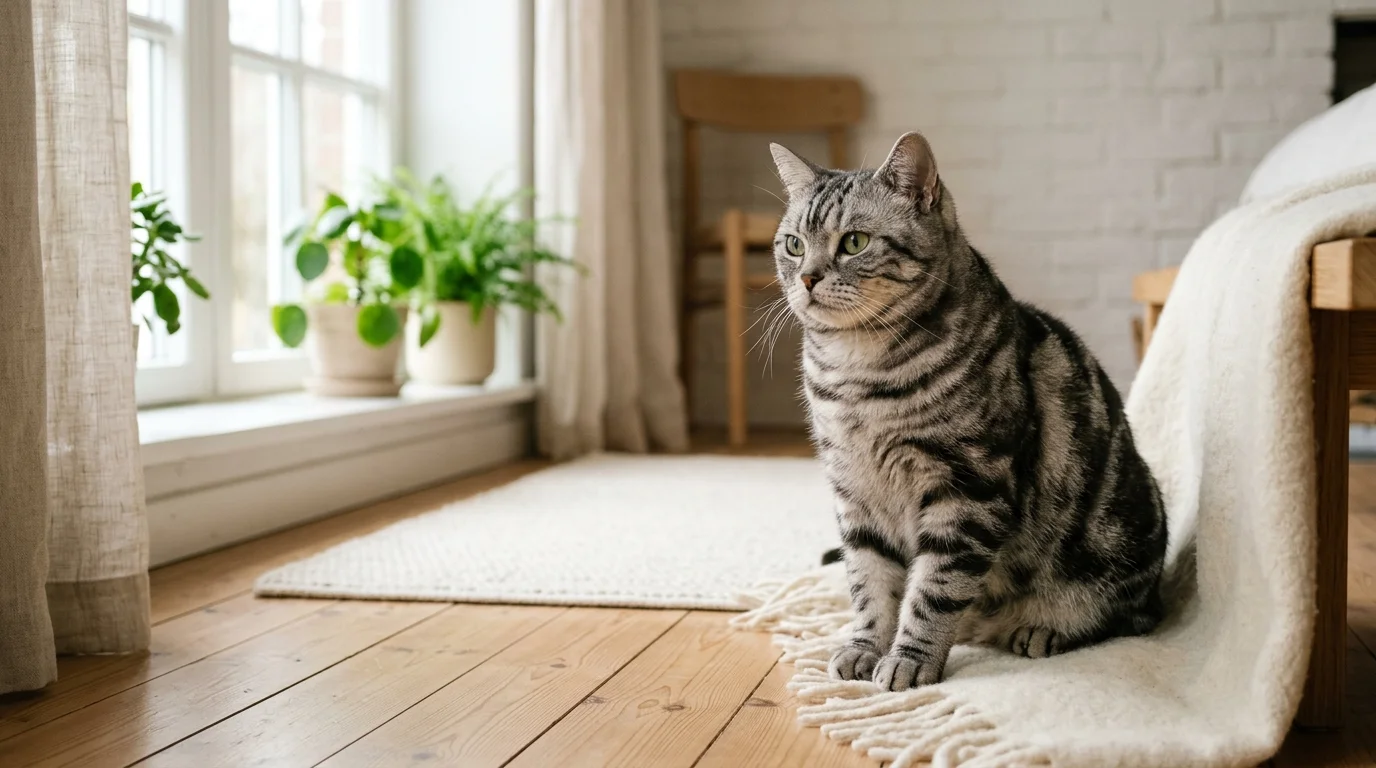
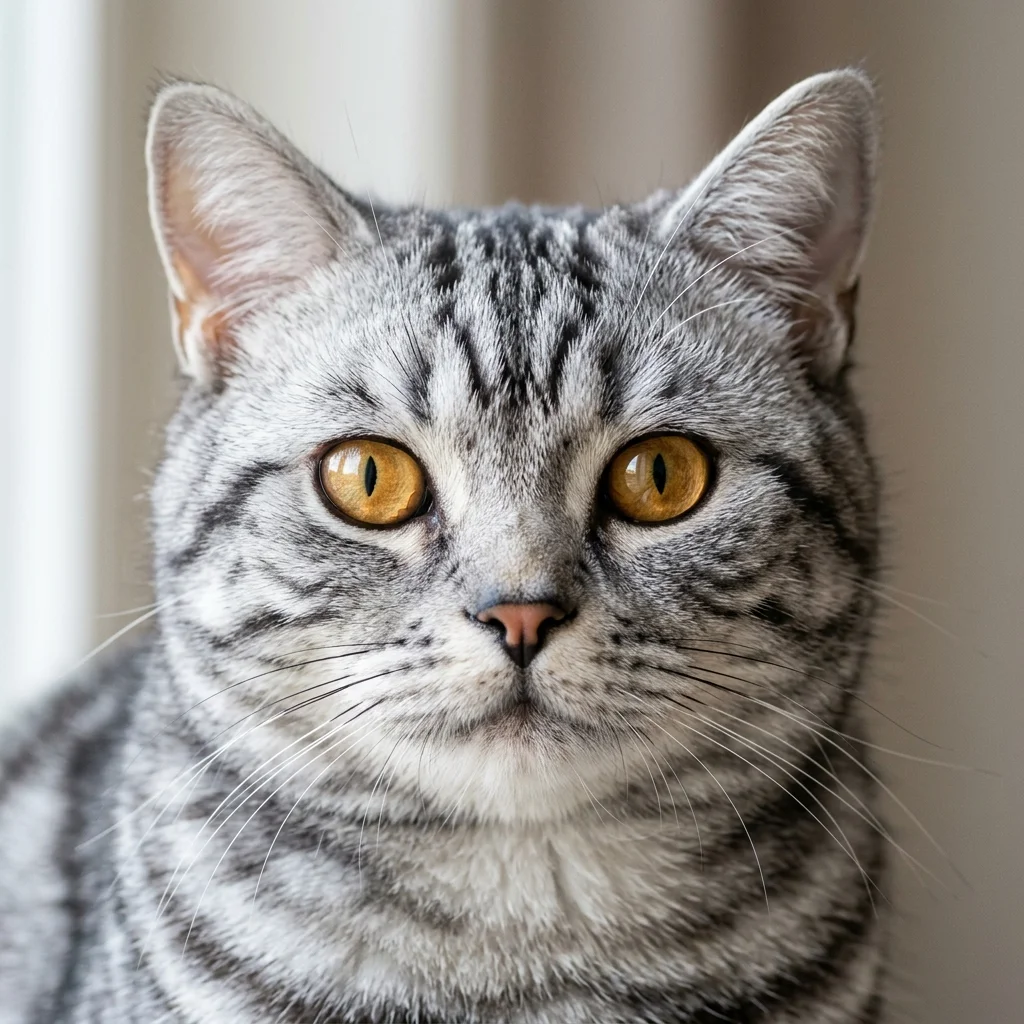
The coat is short, dense, and hard in texture — a practical coat evolved for outdoor work. It comes in more than 80 recognised colour and pattern combinations. The silver classic tabby is the most iconic and widely recognised variety, but brown tabbies, black, white, blue, and bicolour patterns are all common.
The head is large and full-cheeked with a slightly rounded muzzle, medium-sized ears, and large, wide-set eyes in shades of gold, green, or hazel depending on coat colour.
Temperament
The American Shorthair is a calm, easygoing cat with a gentle nature that makes it one of the most versatile companion breeds available. It adapts readily to new situations, tolerates changes in routine, and typically gets along well with children, other cats, and cat-friendly dogs.
While affectionate, the American Shorthair is not overly demanding — it enjoys human company but is capable of entertaining itself when its owners are at work. It will seek attention on its own terms: a quiet presence in the room, a cat who settles near you rather than necessarily on you.
Its working-cat heritage gives it a keen hunting instinct that should be channelled through interactive play. Wand toys, puzzle feeders, and outdoor enclosures are all appreciated. This breed is intelligent and can be trained to respond to commands and even retrieve toys.
The American Shorthair is a reliably even-tempered companion — not a drama queen, not aloof, just a solid and affectionate family cat.
Activity & Play
American Shorthair Activity Guide
The American Shorthair is a moderately active cat that enjoys play without demanding constant entertainment. They balance activity and relaxation well.
Energy Level
American Shorthairs are not couch cats, but they are not hyperactive either. They have steady, moderate energy that stays consistent throughout their life. They enjoy daily play and then settle contentedly on their own.
Daily Exercise
Aim for 15-20 minutes of interactive play per day. Wand toys and feather teasers work well. They enjoy puzzle feeders and toy mice they can bat around independently.
Play Style
As natural hunters, American Shorthairs enjoy stalking and pouncing. They tend to be self-sufficient players and will entertain themselves with toys when you are busy. They do not require constant owner participation.
Vertical Space
A moderate cat tree or window perch satisfies this breed. They enjoy watching outdoor activity from a comfortable vantage point. They are not extreme climbers but appreciate having options.
Indoor vs. Outdoor
American Shorthairs do well as indoor cats. Their calm temperament makes them easy to keep inside. Supervised outdoor time in a safe garden is enjoyed but not essential.
Mental Stimulation
Rotating toys and occasional puzzle feeders keep an American Shorthair mentally engaged. They are intelligent but not demanding, so a moderate enrichment routine suits them well.
Grooming
The American Shorthair's dense, hard-textured coat is low-maintenance by design — it evolved to withstand outdoor conditions and requires little beyond weekly brushing to stay looking its best. A slicker brush or grooming mitt used once a week is sufficient to remove loose hairs and reduce shedding around the home.
During spring shedding season, brushing two to three times per week will help manage the increased hair loss. The coat does not mat or tangle easily, making grooming a straightforward and stress-free routine for both cat and owner.
As with all cats, routine nail trimming every couple of weeks, ear cleaning when needed, and regular dental care are important parts of keeping an American Shorthair healthy.
Health
The American Shorthair is a robust, generally healthy breed with a lifespan of 15–20 years. Centuries of natural selection as a working cat have produced a breed with strong genes and few hereditary disorders.
The primary health concern is hypertrophic cardiomyopathy (HCM), the most common heart disease in cats. Cardiac screening is recommended as part of routine veterinary care for this breed. Mouth and gum disease is also a noted vulnerability, making regular dental hygiene important from an early age.
Obesity is a risk given the breed's laid-back temperament and healthy appetite. Measured feedings rather than free-feeding, combined with daily interactive play, help maintain a healthy weight. A well-cared-for American Shorthair is one of the longest-lived domestic breeds.
Nutrition
Feeding Your American Shorthair
The American Shorthair is a sturdy, well-muscled breed with a naturally hearty appetite. Getting nutrition right is key to keeping this cat lean and healthy throughout its long lifespan.
Protein First
As obligate carnivores, American Shorthairs thrive on diets where animal protein makes up the bulk of the formula. Look for foods listing a named meat source (chicken, turkey, salmon) as the first ingredient. A quality adult formula should contain at least 30-35% protein on a dry matter basis and around 10-15% fat. Avoid foods where corn, wheat, or soy appear before any meat.
Wet vs. Dry Food
A combination of wet and dry food works well for most American Shorthairs. Wet food contributes valuable moisture, which supports kidney health and helps prevent the urinary issues this breed can be prone to. Aim for at least one wet meal per day, with dry food available during other feeding times. Free-feeding dry kibble is common with this breed, though portion control is important since American Shorthairs tend toward weight gain.
Feeding Schedule by Age
- Kittens (under 12 months): Feed 3-4 small meals per day. Kittens need calorie-dense food formulated for growth, with higher protein and fat levels than adult formulas.
- Adults (1-7 years): Two measured meals daily is the standard recommendation. Avoid leaving large portions out all day.
- Seniors (7+ years): Transition to a senior formula with joint-supporting ingredients like glucosamine. Some older cats do better with slightly more frequent, smaller meals.
Watch for Weight Creep
The American Shorthair's easygoing, indoor nature makes obesity a real risk. Monitor body condition every month: you should be able to feel the ribs easily but not see them. If your cat is gaining weight, reduce dry food portions and increase playtime before switching to a diet formula.
Breed-Specific Considerations
Hypertrophic cardiomyopathy (HCM) has some prevalence in this breed. Some cardiologists recommend diets with appropriate taurine levels, since taurine deficiency has been linked to heart issues in cats. Most commercial cat foods are taurine-supplemented, but it is worth confirming this on the label. Always provide fresh water, and consider a cat fountain to encourage drinking.
Family Fit
Is the American Shorthair a Good Family Cat?
The American Shorthair is widely considered one of the best all-around family cats. Their adaptable, even-tempered nature makes them suitable for almost any household.
Families with Children
American Shorthairs are patient and tolerant with children. They enjoy play without becoming overstimulated or defensive. They are sturdy cats that handle the activity of family life without stress. Teaching children gentle interaction is always good practice.
Multi-Pet Households
This breed typically gets along well with other cats and cat-friendly dogs. They are not territorial by nature and usually accept new animals with a proper introduction period.
Elderly Owners
American Shorthairs are ideal companions for older adults. They are affectionate without being clingy, enjoy sitting nearby, and do not require intensive activity. Their independent streak means they manage well during quiet periods.
Apartments
This breed adapts comfortably to apartment living. They are not loud and do not need large spaces. A window perch and a few toys cover their basic needs.
First-Time Owners
The American Shorthair is one of the best breeds for first-time cat owners. They are straightforward to care for, communicative without being demanding, and generally healthy. They require no special grooming or intensive exercise routines.
Fun Facts
- The American Shorthair was one of the first five breeds recognised by the Cat Fanciers' Association at its founding in 1906.
- It was known as the Domestic Shorthair until 1965, when its name was changed to better reflect its American heritage and distinguish it from non-pedigree shorthaired cats.
- Over 80 colour and pattern combinations are officially recognised — making it one of the most varied breeds in terms of appearance.
- The breed's ancestors came to America on the Mayflower and other early settler ships as working mousers.
- American Shorthairs have been known to live well into their late teens and even early twenties with proper care.
FAQ
American Shorthair FAQ
How long do American Shorthairs live?
American Shorthairs are one of the longer-lived domestic breeds. Most live between 15 and 20 years when kept indoors and given regular veterinary care. Their robust genetic diversity, rooted in centuries of natural selection, contributes to their overall longevity.
Do American Shorthairs shed a lot?
Moderate shedding is typical for this breed, with heavier seasonal shedding in spring and autumn. Weekly brushing handles most loose hair and keeps the coat healthy. They are not a low-shedding breed, but maintenance is far less demanding than longhaired breeds.
Are American Shorthairs vocal?
This is a quiet, undemanding breed. American Shorthairs communicate when they want something but are not known for constant meowing or yowling. They express themselves through soft chirps and trills rather than loud vocalizations, making them well suited to apartments and noise-sensitive households.
Are American Shorthairs hypoallergenic?
No cat is truly hypoallergenic, and the American Shorthair is no exception. They produce the Fel d 1 protein that triggers most cat allergies. Allergy sufferers may find that their symptoms vary by individual cat, but this breed is not marketed as a low-allergen choice.
How much does an American Shorthair cost?
From a registered breeder, expect to pay between $600 and $1,500 depending on lineage and location. Show-quality kittens sit at the higher end. Adoption from a rescue or shelter is a more affordable option, and many American Shorthairs and similar mixed-breed cats end up in shelters each year.
Are American Shorthairs good for first-time owners?
Absolutely. Their adaptable, low-drama temperament makes them one of the best breeds for beginners. They are independent enough to tolerate a working household but affectionate enough to form a genuine bond. They rarely develop problem behaviors when given basic enrichment and regular attention.
Gallery
Explore more American Shorthair-style breeds
Browse related breeds or take our matching quiz to find the right fit for your home.
Stay in the loop
Get weekly breed spotlights, care guides, and new additions - straight to your inbox.